| Availability: | |
|---|---|
| Quantity: | |
60 40 rosin core solder for electronics is the bedrock of reliable electrical connections in the world of DIY, repair, and manufacturing. This specific alloy of tin solder wire, composed of 60% tin and 40% lead, offers a unique eutectic property, meaning it melts and solidifies at a single, consistent temperature (around 188°C or 370°F). This eliminates the pasty, semi-solid phase found in other alloys, making it exceptionally forgiving and easy to work with, producing shiny, strong solder joints. The integrated "rosin core" acts as a built-in flux, a chemical agent that cleans the metal surfaces of oxidation during soldering, ensuring a perfect bond.
The 60 40 rosin core solder 2mm diameter is widely considered the perfect all-rounder for general through-hole electronics work. It's thick enough to deliver a substantial amount of solder quickly without being unwieldy, yet thin enough to offer precise control for smaller joints. For hobbyists, technicians, and engineers working on circuit boards, wiring, and component assembly, the 2mm variant strikes the ideal balance between speed, control, and material delivery, making it the most popular diameter for electronic soldering worldwide.
The 60/40 ratio is not arbitrary. This eutectic blend ensures the solder transitions directly from solid to liquid and back, which is critical for creating smooth, reliable joints without "cold solder" defects. While lead-free alternatives exist for commercial and environmental compliance, 60/40 solder remains prized for its superior wettability, lower melting point, and the iconic shiny finish of its joints, which often indicates a well-made connection.
The flux core is as important as the solder alloy itself. Rosin, a natural resin, is a mild, non-corrosive flux perfect for electronics. As you apply heat, the flux flows out first, removing light oxidation and preventing new oxidation from forming, allowing the molten tin/lead alloy to properly "wet" and adhere to the component leads and PCB pads. This built-in system ensures cleaner workflows and more consistent results compared to applying flux separately.
Diameter choice impacts your workflow. A thinner wire (e.g., 0.8mm) is excellent for tiny surface-mount devices but requires more feed for larger joints. A thicker wire (e.g., 3mm+) is for heavy-duty plumbing or stained glass. The 60 40 rosin core solder 2mm sits in the sweet spot: versatile enough for power connectors and large ground planes, yet controllable enough for IC pins and through-hole resistors. It minimizes the need to switch tools during a diverse project.

Selecting the correct roll weight is crucial for efficiency, cost-effectiveness, and solder freshness. A larger roll offers a lower cost per gram but the flux can degrade over many years if not used promptly. Here’s a comprehensive breakdown of the common 60 40 rosin core solder 2mm roll weights.
The 60 40 rosin core solder 2mm 100g roll is the ideal entry point. It's compact, affordable, and perfect for beginners learning the craft or professionals who need a portable option for field repair kits. This size allows you to master technique without committing to a large quantity. It’s also excellent for infrequent hobbyists or for dedicated use on a single, small project.
Stepping up, the 60 40 rosin core solder 2mm 200g roll offers substantially more material without taking up much space. It's the most popular weight for regular electronics enthusiasts who tackle weekend projects, Arduino builds, or occasional repairs. It provides excellent value while ensuring the solder (and its flux) will be used up within a reasonable timeframe, maintaining optimal performance.
Similar to the 200g roll but with a 25% increase, the 60 40 rosin core solder 2mm 250g roll is for the active hobbyist or a small repair shop. It’s a smart choice if you find the 100g roll runs out too quickly and you want to reduce the frequency of reorders. This weight is often seen as a great balance between manageability and volume for consistent users.
The 60 40 rosin core solder 2mm 400g roll marks a shift towards more serious usage. It's tailored for technicians, students in technical programs, or small-scale production benches. This size supports sustained work over weeks or months without needing a replacement, making it highly efficient for environments with regular soldering activity.
A true mainstay for busy workstations, the 60 40 rosin core solder 2mm 500g roll offers significant volume at a compelling price-per-gram. It's designed for repair labs, makerspaces, or prolific DIYers who spend considerable time at the soldering iron. This roll minimizes downtime and is economically advantageous for high-volume users.
The 60 40 rosin core solder 2mm 800g roll is for dedicated production environments, extensive repair services, or educational institutions with multiple workstations. Purchasing at this volume yields significant savings and ensures a constant supply is on hand. Proper storage in a cool, dry place is important to preserve the flux integrity over the longer usage period.
The 60 40 rosin core solder 2mm 900g roll serves a similar niche to the 800g and 1kg rolls, often available as a manufacturer-specific package. It is perfect for small businesses or community workshops that have predictable, high consumption and want to optimize their bulk purchasing just shy of the full kilogram mark.
For maximum long-term value, the 60 40 rosin core solder 2mm 1kg (1000g) roll is the ultimate choice. This industrial-sized spool is intended for manufacturing lines, large repair facilities, or as a central supply for a cooperative or school. The cost savings are substantial, but it requires a commitment to use the solder within a few years and necessitates proper storage conditions to prevent flux deterioration.
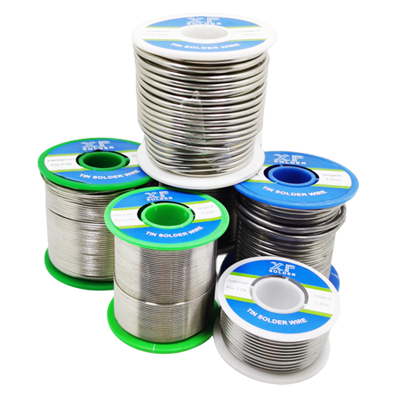
Choosing between a 60 40 rosin core solder 2mm 100g roll and a 60 40 rosin core solder 2mm 1kg roll depends on several factors:
Frequency of Use: Occasional hobbyist? Choose 100g, 200g, or 250g. Daily user? Look at 500g and above.
Project Scope: Building a single microcontroller project? A small roll suffices. Restoring vintage radios or building multiple complex kits? Go larger.
Storage & Freshness: Can you store a large roll in a sealed container away from heat and moisture? If not, smaller rolls ensure the flux remains active.
Budget: While larger rolls have a lower unit cost, the initial outlay is higher. Assess your cash flow and needs.
Temperature Control: Set your soldering iron to 320-380°C (608-716°F). The iron tip should be clean and tinned.
The Process: Apply the tip to both the component lead and the PCB pad simultaneously to heat them. Then, feed the 60 40 rosin core solder 2mm wire into the junction of the heated parts, not directly onto the iron tip. The solder should flow smoothly and create a concave, shiny "fillet."
Cleanliness: Use isopropyl alcohol and a brush to clean any residual flux residues after soldering, though rosin is non-corrosive, it can become sticky over time.
Ventilation: Always work in a well-ventilated area. The fumes from the flux are irritating and should not be inhaled.

For general-purpose electronics where regulatory restrictions (like RoHS) do not apply, 60 40 rosin core solder for electronics remains a top-tier choice due to its ease of use, reliable eutectic property, and excellent joint quality. For commercial products sold in certain regions, lead-free solder may be legally required.
While the 60 40 rosin core solder 2mm can be used for SMD work with a very fine tip and expert technique, it is generally too thick for precision SMD rework. For most SMD components, a thinner diameter (e.g., 0.5mm-0.8mm) is recommended to avoid bridging.
The lifespan depends entirely on usage. A 60 40 rosin core solder 2mm 100g roll might complete dozens of small PCBs, while a 60 40 rosin core solder 2mm 500g roll could last a prolific hobbyist a year or more. More critical is the flux shelf life; stored improperly, the flux can degrade in 2-5 years.
The core difference is volume and economics. The performance of the solder from a 60 40 rosin core solder 2mm 200g roll and a 60 40 rosin core solder 2mm 1000g roll is identical if from the same manufacturer. The larger rolls offer a lower cost per gram but require a commitment to use the material while it's fresh.
Store your solder in its original container, sealed in a zip-lock bag with desiccant packets, in a cool, dry place. This minimizes exposure to air and moisture, which can oxidize the solder wire and degrade the rosin flux core, preserving the performance of your 60 40 rosin core solder for electronics.
Whether you are assembling your first kit or managing a production bench, selecting the right solder in the correct package size is fundamental. The 60 40 rosin core solder 2mm diameter provides unparalleled versatility for through-hole electronics. By carefully considering your usage patterns—from the portable 60 40 rosin core solder 2mm 100g to the bulk efficiency of the 60 40 rosin core solder 2mm 1kg roll—you can equip your workspace with the ideal material that balances cost, convenience, and performance. Invest in quality solder and store it well; it is the foundation upon which every reliable electronic connection is built.
Contact us:
Email: xfsolder@163.com or xfsolder@gmail.com
WhatsApp/Wechat: 008613450770997
60 40 rosin core solder for electronics is the bedrock of reliable electrical connections in the world of DIY, repair, and manufacturing. This specific alloy of tin solder wire, composed of 60% tin and 40% lead, offers a unique eutectic property, meaning it melts and solidifies at a single, consistent temperature (around 188°C or 370°F). This eliminates the pasty, semi-solid phase found in other alloys, making it exceptionally forgiving and easy to work with, producing shiny, strong solder joints. The integrated "rosin core" acts as a built-in flux, a chemical agent that cleans the metal surfaces of oxidation during soldering, ensuring a perfect bond.
The 60 40 rosin core solder 2mm diameter is widely considered the perfect all-rounder for general through-hole electronics work. It's thick enough to deliver a substantial amount of solder quickly without being unwieldy, yet thin enough to offer precise control for smaller joints. For hobbyists, technicians, and engineers working on circuit boards, wiring, and component assembly, the 2mm variant strikes the ideal balance between speed, control, and material delivery, making it the most popular diameter for electronic soldering worldwide.
The 60/40 ratio is not arbitrary. This eutectic blend ensures the solder transitions directly from solid to liquid and back, which is critical for creating smooth, reliable joints without "cold solder" defects. While lead-free alternatives exist for commercial and environmental compliance, 60/40 solder remains prized for its superior wettability, lower melting point, and the iconic shiny finish of its joints, which often indicates a well-made connection.
The flux core is as important as the solder alloy itself. Rosin, a natural resin, is a mild, non-corrosive flux perfect for electronics. As you apply heat, the flux flows out first, removing light oxidation and preventing new oxidation from forming, allowing the molten tin/lead alloy to properly "wet" and adhere to the component leads and PCB pads. This built-in system ensures cleaner workflows and more consistent results compared to applying flux separately.
Diameter choice impacts your workflow. A thinner wire (e.g., 0.8mm) is excellent for tiny surface-mount devices but requires more feed for larger joints. A thicker wire (e.g., 3mm+) is for heavy-duty plumbing or stained glass. The 60 40 rosin core solder 2mm sits in the sweet spot: versatile enough for power connectors and large ground planes, yet controllable enough for IC pins and through-hole resistors. It minimizes the need to switch tools during a diverse project.

Selecting the correct roll weight is crucial for efficiency, cost-effectiveness, and solder freshness. A larger roll offers a lower cost per gram but the flux can degrade over many years if not used promptly. Here’s a comprehensive breakdown of the common 60 40 rosin core solder 2mm roll weights.
The 60 40 rosin core solder 2mm 100g roll is the ideal entry point. It's compact, affordable, and perfect for beginners learning the craft or professionals who need a portable option for field repair kits. This size allows you to master technique without committing to a large quantity. It’s also excellent for infrequent hobbyists or for dedicated use on a single, small project.
Stepping up, the 60 40 rosin core solder 2mm 200g roll offers substantially more material without taking up much space. It's the most popular weight for regular electronics enthusiasts who tackle weekend projects, Arduino builds, or occasional repairs. It provides excellent value while ensuring the solder (and its flux) will be used up within a reasonable timeframe, maintaining optimal performance.
Similar to the 200g roll but with a 25% increase, the 60 40 rosin core solder 2mm 250g roll is for the active hobbyist or a small repair shop. It’s a smart choice if you find the 100g roll runs out too quickly and you want to reduce the frequency of reorders. This weight is often seen as a great balance between manageability and volume for consistent users.
The 60 40 rosin core solder 2mm 400g roll marks a shift towards more serious usage. It's tailored for technicians, students in technical programs, or small-scale production benches. This size supports sustained work over weeks or months without needing a replacement, making it highly efficient for environments with regular soldering activity.
A true mainstay for busy workstations, the 60 40 rosin core solder 2mm 500g roll offers significant volume at a compelling price-per-gram. It's designed for repair labs, makerspaces, or prolific DIYers who spend considerable time at the soldering iron. This roll minimizes downtime and is economically advantageous for high-volume users.
The 60 40 rosin core solder 2mm 800g roll is for dedicated production environments, extensive repair services, or educational institutions with multiple workstations. Purchasing at this volume yields significant savings and ensures a constant supply is on hand. Proper storage in a cool, dry place is important to preserve the flux integrity over the longer usage period.
The 60 40 rosin core solder 2mm 900g roll serves a similar niche to the 800g and 1kg rolls, often available as a manufacturer-specific package. It is perfect for small businesses or community workshops that have predictable, high consumption and want to optimize their bulk purchasing just shy of the full kilogram mark.
For maximum long-term value, the 60 40 rosin core solder 2mm 1kg (1000g) roll is the ultimate choice. This industrial-sized spool is intended for manufacturing lines, large repair facilities, or as a central supply for a cooperative or school. The cost savings are substantial, but it requires a commitment to use the solder within a few years and necessitates proper storage conditions to prevent flux deterioration.

Choosing between a 60 40 rosin core solder 2mm 100g roll and a 60 40 rosin core solder 2mm 1kg roll depends on several factors:
Frequency of Use: Occasional hobbyist? Choose 100g, 200g, or 250g. Daily user? Look at 500g and above.
Project Scope: Building a single microcontroller project? A small roll suffices. Restoring vintage radios or building multiple complex kits? Go larger.
Storage & Freshness: Can you store a large roll in a sealed container away from heat and moisture? If not, smaller rolls ensure the flux remains active.
Budget: While larger rolls have a lower unit cost, the initial outlay is higher. Assess your cash flow and needs.
Temperature Control: Set your soldering iron to 320-380°C (608-716°F). The iron tip should be clean and tinned.
The Process: Apply the tip to both the component lead and the PCB pad simultaneously to heat them. Then, feed the 60 40 rosin core solder 2mm wire into the junction of the heated parts, not directly onto the iron tip. The solder should flow smoothly and create a concave, shiny "fillet."
Cleanliness: Use isopropyl alcohol and a brush to clean any residual flux residues after soldering, though rosin is non-corrosive, it can become sticky over time.
Ventilation: Always work in a well-ventilated area. The fumes from the flux are irritating and should not be inhaled.

For general-purpose electronics where regulatory restrictions (like RoHS) do not apply, 60 40 rosin core solder for electronics remains a top-tier choice due to its ease of use, reliable eutectic property, and excellent joint quality. For commercial products sold in certain regions, lead-free solder may be legally required.
While the 60 40 rosin core solder 2mm can be used for SMD work with a very fine tip and expert technique, it is generally too thick for precision SMD rework. For most SMD components, a thinner diameter (e.g., 0.5mm-0.8mm) is recommended to avoid bridging.
The lifespan depends entirely on usage. A 60 40 rosin core solder 2mm 100g roll might complete dozens of small PCBs, while a 60 40 rosin core solder 2mm 500g roll could last a prolific hobbyist a year or more. More critical is the flux shelf life; stored improperly, the flux can degrade in 2-5 years.
The core difference is volume and economics. The performance of the solder from a 60 40 rosin core solder 2mm 200g roll and a 60 40 rosin core solder 2mm 1000g roll is identical if from the same manufacturer. The larger rolls offer a lower cost per gram but require a commitment to use the material while it's fresh.
Store your solder in its original container, sealed in a zip-lock bag with desiccant packets, in a cool, dry place. This minimizes exposure to air and moisture, which can oxidize the solder wire and degrade the rosin flux core, preserving the performance of your 60 40 rosin core solder for electronics.
Whether you are assembling your first kit or managing a production bench, selecting the right solder in the correct package size is fundamental. The 60 40 rosin core solder 2mm diameter provides unparalleled versatility for through-hole electronics. By carefully considering your usage patterns—from the portable 60 40 rosin core solder 2mm 100g to the bulk efficiency of the 60 40 rosin core solder 2mm 1kg roll—you can equip your workspace with the ideal material that balances cost, convenience, and performance. Invest in quality solder and store it well; it is the foundation upon which every reliable electronic connection is built.
Contact us:
Email: xfsolder@163.com or xfsolder@gmail.com
WhatsApp/Wechat: 008613450770997
The selection of solder is a foundational element in the successful assembly and repair of LED lighting systems. The eutectic 63 37 sn pb solder offers an unparalleled combination of a low melting point, excellent wettability, and joint reliability that is perfectly suited to the thermal sensitivity of LED components. By understanding the specific applications for each diameter—from the precision of 63 37 sn pb solder 1.0mm to the power of 63 37 sn pb solder 2.0mm—you can dramatically improve the quality and efficiency of your work. Packaging this superior alloy as solder in a reel, specifically in a 63 37 sn pb solder 1 kg reel, adds layers of practicality, economy, and consistency that benefit everyone from the professional production engineer to the meticulous hobbyist. Therefore, equipping your workspace with the appropriate diameter of 63 37 sn pb solder for LED Lights is not just a purchase; it is an investment in achieving superior, reliable, and professional results in all you
Our comprehensive range of 63 37 leaded wire solder for electronics is meticulously designed to meet the exacting demands of modern electronics work. The eutectic 63/37 tin-lead alloy guarantees reliable, shiny joints free from cold solder defects. The availability of both 63 37 leaded solder 0.6mm for precision tasks and 63 37 leaded solder 0.9mm for versatile general-purpose work ensures you have the right tool for every job. Furthermore, our flexible packaging—from the bulk 63 37 leaded solder 454g for professionals, to the standard 63 37 leaded solder 227g, and the accessible 63 37 leaded solder 100g for beginners—means there is a perfect option for every user and budget. Elevate your soldering work with the proven performance and quality of genuine 63 37 leaded solder.
Welcome to XF Solder, a leading manufacturer from China dedicated to producing high-quality soldering materials for the global market. We specialize in creating reliable, consistent, and performance-driven solder products that meet the rigorous demands of various industries. Our flagship product, the 60 40 Solder .032'' 1 lb spool, represents the gold standard in through-hole and general-purpose electronics assembly. This article provides a detailed overview of why this specific formulation and packaging is an indispensable inventory item for distributors, a superior choice for importers seeking quality from China, and a perfect 60 40 Solder 1 lb for Wholesale operations globally. We will explore its technical specifications, unparalleled benefits, and the strategic advantage it offers in the competitive electronics supply chain.
The combination of the proven 60 sn 40 pb alloy, the convenience of three standard diameters (1.6mm, 1.8mm, 2mm), and the economic 1lb (454g) packaging makes this product an indispensable tool for anyone involved in creating or repairing electrical assemblies. Whether you are a seasoned engineer working on complex industrial systems or a hobbyist bringing your first circuit to life, this 60 40 sn pb wire solder provides the performance, reliability, and value you need to ensure every connection is perfect. Stock up on this classic soldering solution today and experience the difference that quality materials make.