| Availability: | |
|---|---|
| Quantity: | |
In the intricate world of electronics manufacturing, the choice of soldering materials is foundational to quality, reliability, and efficiency. Among the myriad of options, one alloy has stood the test of time for general-purpose applications: the Tin Solder Roll 60 40. Specifically, the Tin Solder Roll Sn60Pb40 variant represents a classic eutectic alloy, comprising 60% tin and 40% lead, known for its exceptional performance in creating strong, conductive, and reliable electrical joints. This guide delves deep into the specifics of this indispensable material, particularly focusing on the popular Tin Solder Roll offered in various weights like Tin Solder Roll 100g, 200g, 250g, 500g, and 1kg, and with a standard diameter of Tin Solder Roll 0.8mm. Whether you are a production manager, a circuit board assembler, or an electronics hobbyist, understanding the properties, applications, and selection criteria for this solder is crucial for successful production outcomes.
A Tin Solder Roll is a continuous length of solder wire wound onto a spool or reel, designed for use in hand-soldering or automated soldering processes. The designation "60/40" refers to its precise metallic composition: 60% tin (Sn) and 40% lead (Pb). This Tin Solder Roll Sn60Pb40 formulation is celebrated as a near-eutectic alloy. A eutectic alloy has a single melting point rather than a melting range, which is a critical property in soldering. The Tin Solder Roll 60 40 melts completely at approximately 188°C (370°F). This characteristic allows it to solidify quickly upon cooling, minimizing the risk of disturbed joints and "cold solder" defects—a common issue with non-eutectic alloys that remain in a pasty state for a longer period. The consistent performance of the Tin Roll in this alloy makes it a staple for through-hole component soldering, wire tinning, and a variety of repair work.
The effectiveness of the Tin Solder Roll Sn60Pb40 is not accidental; it is rooted in material science. Tin provides the primary bonding strength and corrosion resistance, while lead lowers the melting point, improves wetting action (the ability to flow over surfaces), and reduces the overall cost. The synergy between these metals in a Tin Solder Roll results in a material that exhibits excellent electrical conductivity, mechanical strength, and thermal fatigue resistance. When supplied as a Tin Solder Roll 0.8mm diameter, the wire offers an optimal balance between solder deposition volume and control, suitable for a wide range of component lead sizes commonly found in electronics assemblies.
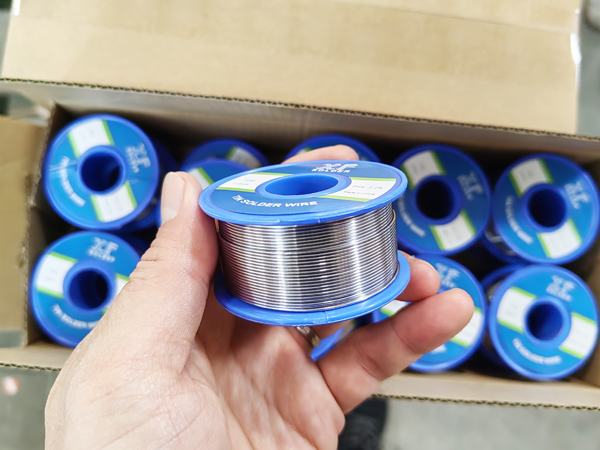
Selecting the appropriate package size for your Tin Solder Roll is a practical consideration that impacts cost, workspace organization, and material freshness. Manufacturers offer this essential alloy in a logical progression of weights to suit different user needs, from occasional hobbyist use to full-scale production lines.
For individuals, students, or technicians who engage in light repair work, prototyping, or small DIY projects, the Tin Solder Roll 100g is an ideal package. Its compact size makes it easy to store and handle on a crowded workbench. A 100g Tin Roll provides a substantial amount of solder for numerous joints without the commitment or potential waste associated with a larger spool. It’s an excellent, low-cost way to keep a reliable Tin Solder Roll Sn60Pb40 on hand for intermittent use.
Stepping up in capacity, the Tin Solder Roll 200g and Tin Solder Roll 250g spools cater to more active users. These sizes are perfectly suited for small to medium-sized workshops, repair centers, or engineers involved in frequent prototyping and small-batch production. The Tin Solder Roll 250g, in particular, offers a significant increase in material without being overly bulky, making it a popular choice for professionals who require a dependable supply of Tin Solder Roll 60 40 for daily tasks. It strikes a balance between economy and convenience.
For small manufacturing cells, dedicated repair stations, or educational labs with multiple users, the Tin Solder Roll 500g presents a highly efficient solution. This size reduces the frequency of roll changes compared to smaller spools, thereby increasing productivity on the production floor. The cost per gram is typically lower than that of the 100g or 250g rolls, offering better value for money for steady, ongoing consumption of Tin Solder Roll Sn60Pb40.
At the apex of the standard weight range is the Tin Solder Roll 1kg. This is the industrial workhorse designed for high-volume electronics production environments. Utilizing a Tin Solder Roll 1kg spool minimizes downtime associated with material replacement, ensures consistency across large production runs, and delivers the most favorable cost efficiency. For factories running multiple soldering stations or automated soldering equipment, the 1kg Tin Roll is the standard, ensuring a continuous and reliable supply of the crucial Tin Solder Roll 60 40 alloy.
While alloy composition and weight are vital, the diameter of the solder wire is equally critical for achieving precision and avoiding defects. The Tin Solder Roll 0.8mm diameter has emerged as one of the most versatile and widely used sizes in electronics work.
The Tin Solder Roll 0.8mm strikes an almost perfect balance. It is thick enough to deliver an adequate volume of solder for standard through-hole components, such as resistors, capacitors, and DIP ICs, with just a few millimeters of wire. Simultaneously, it is thin enough to allow for reasonable control in hand-soldering and is compatible with most benchtop soldering irons and temperature-controlled stations. When using a Tin Solder Roll Sn60Pb40 with a 0.8mm diameter, operators can achieve consistent, concave fillets that indicate good wetting and a strong joint, without the risk of applying excessive solder (bridging) or too little solder (weak joints). This diameter is frequently specified in manufacturing guidelines for a broad spectrum of consumer and industrial electronics.
Effective use of a Tin Solder Roll 0.8mm involves good technique. For hand soldering, the "feed and flow" method is common: touch the heated iron tip to both the component lead and the PCB pad, then feed the Tin Roll wire into the contact point, allowing it to melt and flow freely, rather than melting it directly onto the iron tip. This diameter is also perfectly suited for use in semi-automatic soldering equipment like soldering robots or assistive devices, where the wire feed mechanism is calibrated for this standard size, ensuring repeatable deposition of the Tin Solder Roll 60 40 alloy.

The enduring popularity of the Tin Solder Roll Sn60Pb40 is not without reason. It offers a combination of benefits that are hard to match with many lead-free alternatives, especially for certain applications.
One of the most praised qualities of the Tin Solder Roll 60 40 is its excellent wetting capability. It flows smoothly and readily over properly prepared copper surfaces, creating a strong intermetallic bond. This results in highly reliable joints with fewer voids or imperfections. For rework and repair, where flux activity might be diminished, the inherent solderability of this Tin Roll alloy is a significant advantage.
Decades of use in mission-critical aerospace, military, and telecommunications infrastructure have proven the long-term reliability of Tin Solder Roll Sn60Pb40 joints under various thermal and mechanical stress conditions. For legacy equipment maintenance or applications not bound by RoHS (Restriction of Hazardous Substances) directives, it remains the gold standard.
From a pure material cost perspective, Tin Solder Roll 60 40 is generally less expensive than its high-performance lead-free counterparts (like SnAgCu alloys). When combined with its ease of use and lower soldering temperatures (which reduce energy consumption and thermal stress on components), it presents a cost-effective solution for many non-consumer electronics production scenarios.
To maintain the quality and performance of your Tin Solder Roll, proper handling and storage are essential. This is true whether you have a Tin Solder Roll 100g or a large Tin Solder Roll 1kg spool.
The flux core inside a Tin Roll is hygroscopic and can degrade over time if exposed to moisture. Furthermore, the external surface of the solder wire can oxidize. Always store Tin Solder Roll Sn60Pb40 in its original packaging or a sealed container in a cool, dry place. For production environments, use dispensers that protect the wire from dust and handling.
Particularly for production settings using Tin Solder Roll 500g or 1kg sizes, implement a stock rotation system. Use older spools first to ensure the flux retains its activity, which is crucial for achieving clean, reliable joints with your Tin Solder Roll 60 40.
In summary, the Tin Solder Roll 60 40 Sn60Pb40 is a fundamental material in electronics fabrication and repair. Its selection involves careful consideration of your specific needs. For weight, assess your usage volume: opt for a Tin Solder Roll 100g for light work, a Tin Solder Roll 250g for active prototyping, a Tin Solder Roll 500g for small-scale production, and a Tin Solder Roll 1kg for high-volume manufacturing. For diameter, the Tin Solder Roll 0.8mm is the recommended starting point for most general-purpose through-hole and larger surface-mount work due to its versatility. By choosing the correct Tin Solder Roll specification—whether it's a compact Tin Solder Roll 200g spool or an industrial Tin Solder Roll 1kg reel—and pairing it with proper technique, you ensure strong, durable, and electrically sound connections in every electronics project you undertake. This classic Tin Solder Roll Sn60Pb40 continues to be an invaluable tool in the electronic producer's arsenal, combining proven performance with practical flexibility.
Contact us:
Email: lzpanels@163.com
WhatsApp/Wechat:
In the intricate world of electronics manufacturing, the choice of soldering materials is foundational to quality, reliability, and efficiency. Among the myriad of options, one alloy has stood the test of time for general-purpose applications: the Tin Solder Roll 60 40. Specifically, the Tin Solder Roll Sn60Pb40 variant represents a classic eutectic alloy, comprising 60% tin and 40% lead, known for its exceptional performance in creating strong, conductive, and reliable electrical joints. This guide delves deep into the specifics of this indispensable material, particularly focusing on the popular Tin Solder Roll offered in various weights like Tin Solder Roll 100g, 200g, 250g, 500g, and 1kg, and with a standard diameter of Tin Solder Roll 0.8mm. Whether you are a production manager, a circuit board assembler, or an electronics hobbyist, understanding the properties, applications, and selection criteria for this solder is crucial for successful production outcomes.
A Tin Solder Roll is a continuous length of solder wire wound onto a spool or reel, designed for use in hand-soldering or automated soldering processes. The designation "60/40" refers to its precise metallic composition: 60% tin (Sn) and 40% lead (Pb). This Tin Solder Roll Sn60Pb40 formulation is celebrated as a near-eutectic alloy. A eutectic alloy has a single melting point rather than a melting range, which is a critical property in soldering. The Tin Solder Roll 60 40 melts completely at approximately 188°C (370°F). This characteristic allows it to solidify quickly upon cooling, minimizing the risk of disturbed joints and "cold solder" defects—a common issue with non-eutectic alloys that remain in a pasty state for a longer period. The consistent performance of the Tin Roll in this alloy makes it a staple for through-hole component soldering, wire tinning, and a variety of repair work.
The effectiveness of the Tin Solder Roll Sn60Pb40 is not accidental; it is rooted in material science. Tin provides the primary bonding strength and corrosion resistance, while lead lowers the melting point, improves wetting action (the ability to flow over surfaces), and reduces the overall cost. The synergy between these metals in a Tin Solder Roll results in a material that exhibits excellent electrical conductivity, mechanical strength, and thermal fatigue resistance. When supplied as a Tin Solder Roll 0.8mm diameter, the wire offers an optimal balance between solder deposition volume and control, suitable for a wide range of component lead sizes commonly found in electronics assemblies.

Selecting the appropriate package size for your Tin Solder Roll is a practical consideration that impacts cost, workspace organization, and material freshness. Manufacturers offer this essential alloy in a logical progression of weights to suit different user needs, from occasional hobbyist use to full-scale production lines.
For individuals, students, or technicians who engage in light repair work, prototyping, or small DIY projects, the Tin Solder Roll 100g is an ideal package. Its compact size makes it easy to store and handle on a crowded workbench. A 100g Tin Roll provides a substantial amount of solder for numerous joints without the commitment or potential waste associated with a larger spool. It’s an excellent, low-cost way to keep a reliable Tin Solder Roll Sn60Pb40 on hand for intermittent use.
Stepping up in capacity, the Tin Solder Roll 200g and Tin Solder Roll 250g spools cater to more active users. These sizes are perfectly suited for small to medium-sized workshops, repair centers, or engineers involved in frequent prototyping and small-batch production. The Tin Solder Roll 250g, in particular, offers a significant increase in material without being overly bulky, making it a popular choice for professionals who require a dependable supply of Tin Solder Roll 60 40 for daily tasks. It strikes a balance between economy and convenience.
For small manufacturing cells, dedicated repair stations, or educational labs with multiple users, the Tin Solder Roll 500g presents a highly efficient solution. This size reduces the frequency of roll changes compared to smaller spools, thereby increasing productivity on the production floor. The cost per gram is typically lower than that of the 100g or 250g rolls, offering better value for money for steady, ongoing consumption of Tin Solder Roll Sn60Pb40.
At the apex of the standard weight range is the Tin Solder Roll 1kg. This is the industrial workhorse designed for high-volume electronics production environments. Utilizing a Tin Solder Roll 1kg spool minimizes downtime associated with material replacement, ensures consistency across large production runs, and delivers the most favorable cost efficiency. For factories running multiple soldering stations or automated soldering equipment, the 1kg Tin Roll is the standard, ensuring a continuous and reliable supply of the crucial Tin Solder Roll 60 40 alloy.
While alloy composition and weight are vital, the diameter of the solder wire is equally critical for achieving precision and avoiding defects. The Tin Solder Roll 0.8mm diameter has emerged as one of the most versatile and widely used sizes in electronics work.
The Tin Solder Roll 0.8mm strikes an almost perfect balance. It is thick enough to deliver an adequate volume of solder for standard through-hole components, such as resistors, capacitors, and DIP ICs, with just a few millimeters of wire. Simultaneously, it is thin enough to allow for reasonable control in hand-soldering and is compatible with most benchtop soldering irons and temperature-controlled stations. When using a Tin Solder Roll Sn60Pb40 with a 0.8mm diameter, operators can achieve consistent, concave fillets that indicate good wetting and a strong joint, without the risk of applying excessive solder (bridging) or too little solder (weak joints). This diameter is frequently specified in manufacturing guidelines for a broad spectrum of consumer and industrial electronics.
Effective use of a Tin Solder Roll 0.8mm involves good technique. For hand soldering, the "feed and flow" method is common: touch the heated iron tip to both the component lead and the PCB pad, then feed the Tin Roll wire into the contact point, allowing it to melt and flow freely, rather than melting it directly onto the iron tip. This diameter is also perfectly suited for use in semi-automatic soldering equipment like soldering robots or assistive devices, where the wire feed mechanism is calibrated for this standard size, ensuring repeatable deposition of the Tin Solder Roll 60 40 alloy.

The enduring popularity of the Tin Solder Roll Sn60Pb40 is not without reason. It offers a combination of benefits that are hard to match with many lead-free alternatives, especially for certain applications.
One of the most praised qualities of the Tin Solder Roll 60 40 is its excellent wetting capability. It flows smoothly and readily over properly prepared copper surfaces, creating a strong intermetallic bond. This results in highly reliable joints with fewer voids or imperfections. For rework and repair, where flux activity might be diminished, the inherent solderability of this Tin Roll alloy is a significant advantage.
Decades of use in mission-critical aerospace, military, and telecommunications infrastructure have proven the long-term reliability of Tin Solder Roll Sn60Pb40 joints under various thermal and mechanical stress conditions. For legacy equipment maintenance or applications not bound by RoHS (Restriction of Hazardous Substances) directives, it remains the gold standard.
From a pure material cost perspective, Tin Solder Roll 60 40 is generally less expensive than its high-performance lead-free counterparts (like SnAgCu alloys). When combined with its ease of use and lower soldering temperatures (which reduce energy consumption and thermal stress on components), it presents a cost-effective solution for many non-consumer electronics production scenarios.
To maintain the quality and performance of your Tin Solder Roll, proper handling and storage are essential. This is true whether you have a Tin Solder Roll 100g or a large Tin Solder Roll 1kg spool.
The flux core inside a Tin Roll is hygroscopic and can degrade over time if exposed to moisture. Furthermore, the external surface of the solder wire can oxidize. Always store Tin Solder Roll Sn60Pb40 in its original packaging or a sealed container in a cool, dry place. For production environments, use dispensers that protect the wire from dust and handling.
Particularly for production settings using Tin Solder Roll 500g or 1kg sizes, implement a stock rotation system. Use older spools first to ensure the flux retains its activity, which is crucial for achieving clean, reliable joints with your Tin Solder Roll 60 40.
In summary, the Tin Solder Roll 60 40 Sn60Pb40 is a fundamental material in electronics fabrication and repair. Its selection involves careful consideration of your specific needs. For weight, assess your usage volume: opt for a Tin Solder Roll 100g for light work, a Tin Solder Roll 250g for active prototyping, a Tin Solder Roll 500g for small-scale production, and a Tin Solder Roll 1kg for high-volume manufacturing. For diameter, the Tin Solder Roll 0.8mm is the recommended starting point for most general-purpose through-hole and larger surface-mount work due to its versatility. By choosing the correct Tin Solder Roll specification—whether it's a compact Tin Solder Roll 200g spool or an industrial Tin Solder Roll 1kg reel—and pairing it with proper technique, you ensure strong, durable, and electrically sound connections in every electronics project you undertake. This classic Tin Solder Roll Sn60Pb40 continues to be an invaluable tool in the electronic producer's arsenal, combining proven performance with practical flexibility.
Contact us:
Email: lzpanels@163.com
WhatsApp/Wechat:
The selection of solder is a foundational element in the successful assembly and repair of LED lighting systems. The eutectic 63 37 sn pb solder offers an unparalleled combination of a low melting point, excellent wettability, and joint reliability that is perfectly suited to the thermal sensitivity of LED components. By understanding the specific applications for each diameter—from the precision of 63 37 sn pb solder 1.0mm to the power of 63 37 sn pb solder 2.0mm—you can dramatically improve the quality and efficiency of your work. Packaging this superior alloy as solder in a reel, specifically in a 63 37 sn pb solder 1 kg reel, adds layers of practicality, economy, and consistency that benefit everyone from the professional production engineer to the meticulous hobbyist. Therefore, equipping your workspace with the appropriate diameter of 63 37 sn pb solder for LED Lights is not just a purchase; it is an investment in achieving superior, reliable, and professional results in all you
Our comprehensive range of 63 37 leaded wire solder for electronics is meticulously designed to meet the exacting demands of modern electronics work. The eutectic 63/37 tin-lead alloy guarantees reliable, shiny joints free from cold solder defects. The availability of both 63 37 leaded solder 0.6mm for precision tasks and 63 37 leaded solder 0.9mm for versatile general-purpose work ensures you have the right tool for every job. Furthermore, our flexible packaging—from the bulk 63 37 leaded solder 454g for professionals, to the standard 63 37 leaded solder 227g, and the accessible 63 37 leaded solder 100g for beginners—means there is a perfect option for every user and budget. Elevate your soldering work with the proven performance and quality of genuine 63 37 leaded solder.
Welcome to XF Solder, a leading manufacturer from China dedicated to producing high-quality soldering materials for the global market. We specialize in creating reliable, consistent, and performance-driven solder products that meet the rigorous demands of various industries. Our flagship product, the 60 40 Solder .032'' 1 lb spool, represents the gold standard in through-hole and general-purpose electronics assembly. This article provides a detailed overview of why this specific formulation and packaging is an indispensable inventory item for distributors, a superior choice for importers seeking quality from China, and a perfect 60 40 Solder 1 lb for Wholesale operations globally. We will explore its technical specifications, unparalleled benefits, and the strategic advantage it offers in the competitive electronics supply chain.
The combination of the proven 60 sn 40 pb alloy, the convenience of three standard diameters (1.6mm, 1.8mm, 2mm), and the economic 1lb (454g) packaging makes this product an indispensable tool for anyone involved in creating or repairing electrical assemblies. Whether you are a seasoned engineer working on complex industrial systems or a hobbyist bringing your first circuit to life, this 60 40 sn pb wire solder provides the performance, reliability, and value you need to ensure every connection is perfect. Stock up on this classic soldering solution today and experience the difference that quality materials make.