In the competitive landscape of electronics manufacturing, the quality of your consumables directly impacts your bottom line. Inferior solder wire leads to defects, rework costs, and potential field failures. By choosing XF Solder, you are partnering with a dedicated Chinese supplier of 60 40 solder wire committed to excellence.
We provide a complete range of diameters—from the ultra-precise 60 40 tin lead solder wire 1kg 0.5mm to the heavy-duty 60 40 tin lead solder wire 1kg 3mm—allowing you to select the exact tool for your production needs. Our 1kg spools are the industry standard, offering a manageable size for operators while ensuring continuity in high-volume environments.
Whether you are a high-end electronics factory looking for a reliable partner to supply solder wire to electronics factory assembly lines, or a procurement manager seeking the best wholesale value for 60 40 tin lead solder wire, XF Solder has the product quality, inventory depth, and logistical capability to meet your demands.
| Availability: | |
|---|---|
| Quantity: | |
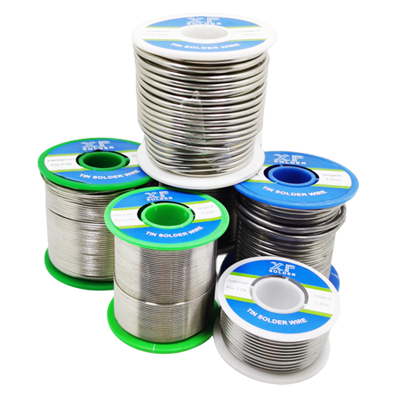
In the fast-paced world of electronics manufacturing, the integrity of every connection dictates the longevity and performance of the final product. For factories producing high-end consumer goods, automotive electronics, or industrial control systems, the choice of soldering materials is paramount. As a professional Chinese supplier of 60 40 solder wire, XF Solder understands these stringent requirements. We specialize in the production and wholesale distribution of premium 60 40 tin lead rosin core solder wire, packaged conveniently in 1kg spools and available in the most in-demand diameters: 0.5mm, 0.8mm, 1mm, 2mm, and 3mm.
This article provides an in-depth look at why our 60 40 tin lead solder wire is the ideal choice for your assembly line, how to select the correct diameter for your specific applications, and why partnering with XF Solder ensures a competitive edge in your supply chain.

For decades, the tin-lead alloy, particularly the 60/40 composition, has been the gold standard in the electronics industry. While the industry has seen a shift towards lead-free alternatives due to environmental regulations like RoHS, 60 40 tin lead solder wire remains the preferred choice for specific high-reliability sectors, aerospace, military applications, and repair work due to its superior wetting and lower melting point.
The "60 40" designation refers to the alloy composition: 60% Tin (Sn) and 40% Lead (Pb). This specific ratio creates a eutectic alloy. A eutectic alloy transitions directly from a solid to a liquid state at a specific temperature (183°C - 190°C) without passing through a plastic or "pasty" phase. This characteristic is critical for electronics assembly as it minimizes the time the components and PCB are exposed to heat and reduces the risk of cold or disturbed solder joints during the cooling process.
Superior Wetting Action: The tin content provides excellent bonding with copper pads and component leads.
Lower Surface Tension: The lead component reduces surface tension, allowing the molten solder to flow smoothly and evenly across the joint.
Reliability: This alloy is known for producing strong, ductile joints that can withstand thermal and mechanical stress over long periods.
When combined with a flux core, the result is a high-performance 60 40 tin lead rosin core solder wire that delivers consistent, repeatable results on the production line.
Our 60 40 tin lead rosin core solder wire is not just alloy; it is a complete system. The core is filled with a precisely formulated rosin-based flux. This flux plays several vital roles during the soldering process:
Oxide Removal: Metals naturally form an oxide layer when exposed to air. This layer prevents the solder from bonding properly. When the flux melts, it chemically removes these oxides from the metal surfaces.
Surface Tension Reduction: Just as with the alloy, the flux further reduces the surface tension, promoting better wetting and flow.
Protection During Soldering: The flux creates a protective barrier over the clean metal surfaces, preventing re-oxidation during the brief moments before the solder solidifies.
The rosin flux used in our wire is typically "water clear" or mildly activated, ensuring it is effective enough for industrial applications while leaving a non-conductive, non-corrosive residue that is often acceptable to leave on the board, reducing cleaning costs for the electronics factory.

As a leading Chinese supplier of 60 40 solder wire, XF Solder operates with a commitment to quality control, consistency, and competitive pricing. We bridge the gap between raw material costs and the high-quality demands of global electronics manufacturers. When you choose to supply solder wire to electronics factory operations, you need a partner who understands logistics, packaging, and the technical nuances of the product. XF Solder is that partner.
Factory Direct Pricing: By manufacturing the wire ourselves, we eliminate middlemen, allowing us to offer highly competitive wholesale prices without compromising on the quality of the raw materials (pure tin and lead).
Stringent Quality Control: Every batch of our 60 40 tin lead solder wire undergoes rigorous testing for alloy composition, flux content percentage, and tensile strength. We ensure that the wire feeds smoothly through automatic soldering machines without "spattering" or "splashing."
Consistent Diameter Tolerance: In automated assembly, consistency is king. Whether you order 60 40 tin lead solder wire 1kg 0.5mm or 60 40 tin lead solder wire 1kg 3mm, we guarantee a tight diameter tolerance, ensuring steady feed rates and consistent solder volume at every joint.
Reliable Packaging: Our 1kg spools are wound neatly to prevent tangling and are sealed in vacuum packaging to protect the wire from oxidation and moisture during transit and storage.
The specific diameter of the 60 40 tin lead solder wire 1kg spool you choose is critical to the efficiency and quality of your assembly process. Selecting the wrong diameter can lead to excessive solder usage (waste), cold joints, or bridging between fine-pitch components.
XF Solder supplies the five most common diameters to meet every requirement of an electronics factory.
The 60 40 tin lead solder wire 1kg 0.5mm is the finest diameter in our standard lineup. This is specifically designed for the most delicate and high-precision soldering tasks.
Applications:
Fine Pitch Components: Soldering surface-mount components (SMDs) with very fine leads, such as TQFP (Thin Quad Flat Pack) or connectors with 0.4mm or 0.5mm pitch.
Micro-rework: Repairing damaged traces on high-density interconnect (HDI) boards.
Small Gauge Wire: Soldering extremely thin, enameled wires to terminals.
Advantages: The thin diameter allows for pinpoint accuracy. You can deliver exactly the right amount of solder exactly where it is needed, preventing bridging and ensuring a clean, professional finish.
For many general-purpose electronics assembly tasks, the 60 40 tin lead solder wire 1kg 0.8mm is the preferred choice. It offers a perfect balance between control and delivery speed.
Applications:
Standard Through-Hole Components: Soldering resistors, capacitors, and ICs on standard PCBs.
General SMD Rework: Ideal for soldering and desoldering a wide variety of components.
Connector Soldering: Suitable for most connector types where a moderate amount of solder is required.
Advantages: 0.8mm wire is thick enough to feed quickly for standard joints but thin enough to maintain control on moderately dense boards. It is the most common diameter used in prototyping labs and medium-volume production lines.
When you need a stronger, more substantial joint quickly, the 60 40 tin lead solder wire 1kg 1mm is the optimal solution. It delivers a higher volume of solder per second compared to the 0.8mm wire.
Applications:
Larger Through-Hole Joints: Soldering heavy-duty connectors, terminal blocks, and components with thick leads.
Potting and Tinning: Tinning the ends of multi-strand wires or larger gauge cables.
Basic Metalwork: While primarily for electronics, this size can also be used for simple electrical repairs and joining non-electronic metal parts like brackets and shields.
Advantages: The 1mm diameter speeds up production when working with components that require a larger fillet of solder, ensuring good thermal and electrical conductivity.
Moving into heavier applications, the 60 40 tin lead solder wire 1kg 2mm is designed for jobs that require a significant volume of filler metal. This is less common on densely packed PCBs but essential for power electronics and heavy assembly.
Applications:
Power Electronics: Soldering heavy lugs, bus bars, and large transformers to circuit boards.
Chassis Grounding: Creating large, reliable ground points on metal chassis.
Battery Assembly: Connecting high-capacity battery cells or terminals.
Advantages: The 2mm diameter allows for rapid deposition of solder, making it highly efficient for creating large, thermally demanding joints.
The 60 40 tin lead solder wire 1kg 3mm is the largest diameter we supply, catering to heavy industrial soldering tasks that require maximum solder feed.
Applications:
Large Gauge Wire Splicing: Creating robust, soldered splices in heavy power cables (e.g., 4 AWG and larger).
Sheet Metal Fabrication: Soldering seams in sheet metal enclosures or ductwork where electronics are housed.
Radiator and Heat Exchanger Repair: Although less common in modern electronics factories, it is used in associated repair and maintenance tasks for cooling systems.
Advantages: This diameter provides the maximum feed rate, allowing an operator to build up large joints quickly and efficiently. It is ideal for applications where joint strength and bulk are the primary requirements.
To provide further clarity for our clients, we have compiled a list of frequently asked questions regarding our products and their applications.
When stored properly in a cool, dry environment and kept in its original sealed packaging, our 60 40 tin lead rosin core solder wire has an indefinite shelf life. The tin-lead alloy does not degrade over time. The primary concern is the flux core. While the rosin flux is stable, if the wire is exposed to high humidity for extended periods, the flux can absorb moisture, leading to "solder spatter" during heating. We recommend storing unopened spools in a climate-controlled environment and, once opened, using the wire within 2-3 years for optimal performance.
Yes, absolutely. As a flexible Chinese supplier of 60 40 solder wire, we understand that one size does not always fit all. While we stock the standard 1kg spools in 0.5mm, 0.8mm, 1mm, 2mm, and 3mm, we can accommodate custom orders for different spool weights, specialized flux types (e.g., no-clean, water-soluble), or specific alloy tolerances based on volume commitments. Please contact our sales team with your requirements.
Consistency is critical for automated assembly. We utilize advanced cold-drawing and extrusion processes monitored by laser micrometers. Our quality assurance protocol dictates that the diameter tolerance for our 60 40 tin lead solder wire 1kg 0.5mm through to the 60 40 tin lead solder wire 1kg 3mm adheres to international standards, ensuring that your soldering robots or hand-soldering stations receive a consistent feed every time.
Despite the industry shift towards RoHS compliance, many factories choose to supply solder wire to electronics factory operations that cater to specific markets where leaded solder is still required or preferred. 60 40 tin lead solder wire offers:
Lower Melting Point: Reduces thermal stress on heat-sensitive components.
Superior Wetting: Flows better on difficult-to-solder surfaces like nickel or old tin-lead plated boards.
Ductility: Leaded joints are less brittle than many lead-free alternatives, making them more resistant to vibration and mechanical shock—a critical requirement for military, aerospace, and automotive under-hood applications.
Appearance: The shiny, bright finish of a leaded joint is often a visual indicator of quality for inspectors.
The rosin core in our standard 60 40 tin lead rosin core solder wire is designed to leave a residue that is non-conductive and non-corrosive. In many consumer electronics applications, this residue can be left on the board without causing issues. However, for high-reliability or medical applications where absolute cleanliness is required, the residue can be easily cleaned with common solvents like isopropyl alcohol (IPA). If you require a strictly "no-clean" flux with minimal visible residue, we can discuss our specialized flux core options.
For wholesale clients, we typically supply our 60 40 tin lead solder wire 1kg spools packaged in master cartons. For example, multiple 1kg spools of 60 40 tin lead solder wire 1kg 0.8mm are packed together in a sturdy carton for safe transport. For very large supply contracts, we can arrange for palletized shipping with appropriate export packaging to ensure the wire arrives at your factory in perfect condition, regardless of whether you are ordering a single diameter like 60 40 tin lead solder wire 1kg 2mm or a mix of all five sizes.

In the competitive landscape of electronics manufacturing, the quality of your consumables directly impacts your bottom line. Inferior solder wire leads to defects, rework costs, and potential field failures. By choosing XF Solder, you are partnering with a dedicated Chinese supplier of 60 40 solder wire committed to excellence.
We provide a complete range of diameters—from the ultra-precise 60 40 tin lead solder wire 1kg 0.5mm to the heavy-duty 60 40 tin lead solder wire 1kg 3mm—allowing you to select the exact tool for your production needs. Our 1kg spools are the industry standard, offering a manageable size for operators while ensuring continuity in high-volume environments.
Whether you are a high-end electronics factory looking for a reliable partner to supply solder wire to electronics factory assembly lines, or a procurement manager seeking the best wholesale value for 60 40 tin lead solder wire, XF Solder has the product quality, inventory depth, and logistical capability to meet your demands.
Contact XF Solder today to discuss your requirements, request a sample, or obtain a competitive quote for bulk quantities. Let us help you ensure every solder joint is a point of pride.
Contact us:
Email: xfsolder@163.com or xfsolder@gmail.com
WhatsApp/Wechat: +8613450770997
In the fast-paced world of electronics manufacturing, the integrity of every connection dictates the longevity and performance of the final product. For factories producing high-end consumer goods, automotive electronics, or industrial control systems, the choice of soldering materials is paramount. As a professional Chinese supplier of 60 40 solder wire, XF Solder understands these stringent requirements. We specialize in the production and wholesale distribution of premium 60 40 tin lead rosin core solder wire, packaged conveniently in 1kg spools and available in the most in-demand diameters: 0.5mm, 0.8mm, 1mm, 2mm, and 3mm.
This article provides an in-depth look at why our 60 40 tin lead solder wire is the ideal choice for your assembly line, how to select the correct diameter for your specific applications, and why partnering with XF Solder ensures a competitive edge in your supply chain.

For decades, the tin-lead alloy, particularly the 60/40 composition, has been the gold standard in the electronics industry. While the industry has seen a shift towards lead-free alternatives due to environmental regulations like RoHS, 60 40 tin lead solder wire remains the preferred choice for specific high-reliability sectors, aerospace, military applications, and repair work due to its superior wetting and lower melting point.
The "60 40" designation refers to the alloy composition: 60% Tin (Sn) and 40% Lead (Pb). This specific ratio creates a eutectic alloy. A eutectic alloy transitions directly from a solid to a liquid state at a specific temperature (183°C - 190°C) without passing through a plastic or "pasty" phase. This characteristic is critical for electronics assembly as it minimizes the time the components and PCB are exposed to heat and reduces the risk of cold or disturbed solder joints during the cooling process.
Superior Wetting Action: The tin content provides excellent bonding with copper pads and component leads.
Lower Surface Tension: The lead component reduces surface tension, allowing the molten solder to flow smoothly and evenly across the joint.
Reliability: This alloy is known for producing strong, ductile joints that can withstand thermal and mechanical stress over long periods.
When combined with a flux core, the result is a high-performance 60 40 tin lead rosin core solder wire that delivers consistent, repeatable results on the production line.
Our 60 40 tin lead rosin core solder wire is not just alloy; it is a complete system. The core is filled with a precisely formulated rosin-based flux. This flux plays several vital roles during the soldering process:
Oxide Removal: Metals naturally form an oxide layer when exposed to air. This layer prevents the solder from bonding properly. When the flux melts, it chemically removes these oxides from the metal surfaces.
Surface Tension Reduction: Just as with the alloy, the flux further reduces the surface tension, promoting better wetting and flow.
Protection During Soldering: The flux creates a protective barrier over the clean metal surfaces, preventing re-oxidation during the brief moments before the solder solidifies.
The rosin flux used in our wire is typically "water clear" or mildly activated, ensuring it is effective enough for industrial applications while leaving a non-conductive, non-corrosive residue that is often acceptable to leave on the board, reducing cleaning costs for the electronics factory.

As a leading Chinese supplier of 60 40 solder wire, XF Solder operates with a commitment to quality control, consistency, and competitive pricing. We bridge the gap between raw material costs and the high-quality demands of global electronics manufacturers. When you choose to supply solder wire to electronics factory operations, you need a partner who understands logistics, packaging, and the technical nuances of the product. XF Solder is that partner.
Factory Direct Pricing: By manufacturing the wire ourselves, we eliminate middlemen, allowing us to offer highly competitive wholesale prices without compromising on the quality of the raw materials (pure tin and lead).
Stringent Quality Control: Every batch of our 60 40 tin lead solder wire undergoes rigorous testing for alloy composition, flux content percentage, and tensile strength. We ensure that the wire feeds smoothly through automatic soldering machines without "spattering" or "splashing."
Consistent Diameter Tolerance: In automated assembly, consistency is king. Whether you order 60 40 tin lead solder wire 1kg 0.5mm or 60 40 tin lead solder wire 1kg 3mm, we guarantee a tight diameter tolerance, ensuring steady feed rates and consistent solder volume at every joint.
Reliable Packaging: Our 1kg spools are wound neatly to prevent tangling and are sealed in vacuum packaging to protect the wire from oxidation and moisture during transit and storage.
The specific diameter of the 60 40 tin lead solder wire 1kg spool you choose is critical to the efficiency and quality of your assembly process. Selecting the wrong diameter can lead to excessive solder usage (waste), cold joints, or bridging between fine-pitch components.
XF Solder supplies the five most common diameters to meet every requirement of an electronics factory.
The 60 40 tin lead solder wire 1kg 0.5mm is the finest diameter in our standard lineup. This is specifically designed for the most delicate and high-precision soldering tasks.
Applications:
Fine Pitch Components: Soldering surface-mount components (SMDs) with very fine leads, such as TQFP (Thin Quad Flat Pack) or connectors with 0.4mm or 0.5mm pitch.
Micro-rework: Repairing damaged traces on high-density interconnect (HDI) boards.
Small Gauge Wire: Soldering extremely thin, enameled wires to terminals.
Advantages: The thin diameter allows for pinpoint accuracy. You can deliver exactly the right amount of solder exactly where it is needed, preventing bridging and ensuring a clean, professional finish.
For many general-purpose electronics assembly tasks, the 60 40 tin lead solder wire 1kg 0.8mm is the preferred choice. It offers a perfect balance between control and delivery speed.
Applications:
Standard Through-Hole Components: Soldering resistors, capacitors, and ICs on standard PCBs.
General SMD Rework: Ideal for soldering and desoldering a wide variety of components.
Connector Soldering: Suitable for most connector types where a moderate amount of solder is required.
Advantages: 0.8mm wire is thick enough to feed quickly for standard joints but thin enough to maintain control on moderately dense boards. It is the most common diameter used in prototyping labs and medium-volume production lines.
When you need a stronger, more substantial joint quickly, the 60 40 tin lead solder wire 1kg 1mm is the optimal solution. It delivers a higher volume of solder per second compared to the 0.8mm wire.
Applications:
Larger Through-Hole Joints: Soldering heavy-duty connectors, terminal blocks, and components with thick leads.
Potting and Tinning: Tinning the ends of multi-strand wires or larger gauge cables.
Basic Metalwork: While primarily for electronics, this size can also be used for simple electrical repairs and joining non-electronic metal parts like brackets and shields.
Advantages: The 1mm diameter speeds up production when working with components that require a larger fillet of solder, ensuring good thermal and electrical conductivity.
Moving into heavier applications, the 60 40 tin lead solder wire 1kg 2mm is designed for jobs that require a significant volume of filler metal. This is less common on densely packed PCBs but essential for power electronics and heavy assembly.
Applications:
Power Electronics: Soldering heavy lugs, bus bars, and large transformers to circuit boards.
Chassis Grounding: Creating large, reliable ground points on metal chassis.
Battery Assembly: Connecting high-capacity battery cells or terminals.
Advantages: The 2mm diameter allows for rapid deposition of solder, making it highly efficient for creating large, thermally demanding joints.
The 60 40 tin lead solder wire 1kg 3mm is the largest diameter we supply, catering to heavy industrial soldering tasks that require maximum solder feed.
Applications:
Large Gauge Wire Splicing: Creating robust, soldered splices in heavy power cables (e.g., 4 AWG and larger).
Sheet Metal Fabrication: Soldering seams in sheet metal enclosures or ductwork where electronics are housed.
Radiator and Heat Exchanger Repair: Although less common in modern electronics factories, it is used in associated repair and maintenance tasks for cooling systems.
Advantages: This diameter provides the maximum feed rate, allowing an operator to build up large joints quickly and efficiently. It is ideal for applications where joint strength and bulk are the primary requirements.

To provide further clarity for our clients, we have compiled a list of frequently asked questions regarding our products and their applications.
When stored properly in a cool, dry environment and kept in its original sealed packaging, our 60 40 tin lead rosin core solder wire has an indefinite shelf life. The tin-lead alloy does not degrade over time. The primary concern is the flux core. While the rosin flux is stable, if the wire is exposed to high humidity for extended periods, the flux can absorb moisture, leading to "solder spatter" during heating. We recommend storing unopened spools in a climate-controlled environment and, once opened, using the wire within 2-3 years for optimal performance.
Yes, absolutely. As a flexible Chinese supplier of 60 40 solder wire, we understand that one size does not always fit all. While we stock the standard 1kg spools in 0.5mm, 0.8mm, 1mm, 2mm, and 3mm, we can accommodate custom orders for different spool weights, specialized flux types (e.g., no-clean, water-soluble), or specific alloy tolerances based on volume commitments. Please contact our sales team with your requirements.
Consistency is critical for automated assembly. We utilize advanced cold-drawing and extrusion processes monitored by laser micrometers. Our quality assurance protocol dictates that the diameter tolerance for our 60 40 tin lead solder wire 1kg 0.5mm through to the 60 40 tin lead solder wire 1kg 3mm adheres to international standards, ensuring that your soldering robots or hand-soldering stations receive a consistent feed every time.
Despite the industry shift towards RoHS compliance, many factories choose to supply solder wire to electronics factory operations that cater to specific markets where leaded solder is still required or preferred. 60 40 tin lead solder wire offers:
Lower Melting Point: Reduces thermal stress on heat-sensitive components.
Superior Wetting: Flows better on difficult-to-solder surfaces like nickel or old tin-lead plated boards.
Ductility: Leaded joints are less brittle than many lead-free alternatives, making them more resistant to vibration and mechanical shock—a critical requirement for military, aerospace, and automotive under-hood applications.
Appearance: The shiny, bright finish of a leaded joint is often a visual indicator of quality for inspectors.
The rosin core in our standard 60 40 tin lead rosin core solder wire is designed to leave a residue that is non-conductive and non-corrosive. In many consumer electronics applications, this residue can be left on the board without causing issues. However, for high-reliability or medical applications where absolute cleanliness is required, the residue can be easily cleaned with common solvents like isopropyl alcohol (IPA). If you require a strictly "no-clean" flux with minimal visible residue, we can discuss our specialized flux core options.
For wholesale clients, we typically supply our 60 40 tin lead solder wire 1kg spools packaged in master cartons. For example, multiple 1kg spools of 60 40 tin lead solder wire 1kg 0.8mm are packed together in a sturdy carton for safe transport. For very large supply contracts, we can arrange for palletized shipping with appropriate export packaging to ensure the wire arrives at your factory in perfect condition, regardless of whether you are ordering a single diameter like 60 40 tin lead solder wire 1kg 2mm or a mix of all five sizes.

In the competitive landscape of electronics manufacturing, the quality of your consumables directly impacts your bottom line. Inferior solder wire leads to defects, rework costs, and potential field failures. By choosing XF Solder, you are partnering with a dedicated Chinese supplier of 60 40 solder wire committed to excellence.
We provide a complete range of diameters—from the ultra-precise 60 40 tin lead solder wire 1kg 0.5mm to the heavy-duty 60 40 tin lead solder wire 1kg 3mm—allowing you to select the exact tool for your production needs. Our 1kg spools are the industry standard, offering a manageable size for operators while ensuring continuity in high-volume environments.
Whether you are a high-end electronics factory looking for a reliable partner to supply solder wire to electronics factory assembly lines, or a procurement manager seeking the best wholesale value for 60 40 tin lead solder wire, XF Solder has the product quality, inventory depth, and logistical capability to meet your demands.
Contact XF Solder today to discuss your requirements, request a sample, or obtain a competitive quote for bulk quantities. Let us help you ensure every solder joint is a point of pride.
Contact us:
Email: xfsolder@163.com or xfsolder@gmail.com
WhatsApp/Wechat: +8613450770997
The selection of solder is a foundational element in the successful assembly and repair of LED lighting systems. The eutectic 63 37 sn pb solder offers an unparalleled combination of a low melting point, excellent wettability, and joint reliability that is perfectly suited to the thermal sensitivity of LED components. By understanding the specific applications for each diameter—from the precision of 63 37 sn pb solder 1.0mm to the power of 63 37 sn pb solder 2.0mm—you can dramatically improve the quality and efficiency of your work. Packaging this superior alloy as solder in a reel, specifically in a 63 37 sn pb solder 1 kg reel, adds layers of practicality, economy, and consistency that benefit everyone from the professional production engineer to the meticulous hobbyist. Therefore, equipping your workspace with the appropriate diameter of 63 37 sn pb solder for LED Lights is not just a purchase; it is an investment in achieving superior, reliable, and professional results in all you
Our comprehensive range of 63 37 leaded wire solder for electronics is meticulously designed to meet the exacting demands of modern electronics work. The eutectic 63/37 tin-lead alloy guarantees reliable, shiny joints free from cold solder defects. The availability of both 63 37 leaded solder 0.6mm for precision tasks and 63 37 leaded solder 0.9mm for versatile general-purpose work ensures you have the right tool for every job. Furthermore, our flexible packaging—from the bulk 63 37 leaded solder 454g for professionals, to the standard 63 37 leaded solder 227g, and the accessible 63 37 leaded solder 100g for beginners—means there is a perfect option for every user and budget. Elevate your soldering work with the proven performance and quality of genuine 63 37 leaded solder.
Welcome to XF Solder, a leading manufacturer from China dedicated to producing high-quality soldering materials for the global market. We specialize in creating reliable, consistent, and performance-driven solder products that meet the rigorous demands of various industries. Our flagship product, the 60 40 Solder .032'' 1 lb spool, represents the gold standard in through-hole and general-purpose electronics assembly. This article provides a detailed overview of why this specific formulation and packaging is an indispensable inventory item for distributors, a superior choice for importers seeking quality from China, and a perfect 60 40 Solder 1 lb for Wholesale operations globally. We will explore its technical specifications, unparalleled benefits, and the strategic advantage it offers in the competitive electronics supply chain.
The combination of the proven 60 sn 40 pb alloy, the convenience of three standard diameters (1.6mm, 1.8mm, 2mm), and the economic 1lb (454g) packaging makes this product an indispensable tool for anyone involved in creating or repairing electrical assemblies. Whether you are a seasoned engineer working on complex industrial systems or a hobbyist bringing your first circuit to life, this 60 40 sn pb wire solder provides the performance, reliability, and value you need to ensure every connection is perfect. Stock up on this classic soldering solution today and experience the difference that quality materials make.