From the delicate traces of a smartphone motherboard to the robust connections in an industrial power supply, the integrity of every solder joint is foundational. The specialized coil of tin wire 60% with lead 40% provides a time-tested, reliable, and versatile solution for creating these connections. By offering key diameters—the precision of tin wire 0.7mm, the versatility of tin wire 1.8mm, and the strength of tin wire 2.3mm—this product line equips professionals and enthusiasts to tackle any circuit joinery challenge with confidence.
Understanding the properties and optimal applications for each form of this tin wire for circuits allows for smarter material selection, leading to higher quality assemblies, fewer failures, and more efficient workflows. Investing in a high-quality coil of tin wire in the appropriate diameters is an investment in the reliability and longevity of your electronic projects. As technology continues to evolve, the fundamental need for strong, conductive, and well-formed solder joints remains, securing the ongoing relevance of this essential material in the maker's and engineer's toolkit.
| Availability: | |
|---|---|
| Quantity: | |
In the intricate world of electronics manufacturing and repair, the materials used for creating reliable, durable connections are as critical as the components themselves. Among these essential materials, tin wire stands as a fundamental element, particularly when alloyed for specific performance characteristics. A specialized product that has garnered significant attention in professional circles is the coil of tin wire 60% with lead 40%. This specific alloy, often supplied in convenient coils, offers a unique balance of properties that pure tin or other alloys sometimes cannot match. This article delves deep into the world of this particular soldering material, focusing on its application in circuit joinery and the practical benefits of its available diameters: tin wire 0.7mm, tin wire 1.8mm, and tin wire 2.3mm. Whether you are an electrical engineer, a PCB assembly technician, or a hobbyist working on intricate projects, understanding the nuances of this coil of tin wire can elevate the quality and reliability of your work.
Before examining its forms and applications, it's vital to understand the composition and inherent properties of this alloy. The designation tin wire 60% with lead 40% refers to a solder alloy where tin makes up 60% of the composition by weight, and lead constitutes the remaining 40%. This ratio is not arbitrary; it is close to the eutectic point of the tin-lead system, though a true eutectic solder is 63% tin and 37% lead. The 60/40 blend offers a slightly plastic range during solidification, which can be beneficial in certain hand-soldering applications as it allows a brief moment for adjusting components.
The primary role of tin in this coil of tin is to provide the metallurgical bonding capability. Tin readily alloys with copper, silver, and other common PCB and component lead materials, creating strong intermetallic bonds. The lead component, meanwhile, serves several purposes. It lowers the melting point of the alloy compared to pure tin, making it easier to work with. It also improves the "wetting" action—the ability of the molten solder to flow and adhere to surfaces—and reduces the surface tension of the molten alloy. The resulting tin wire for circuits made from this alloy is known for producing smooth, shiny fillets that indicate a good-quality solder joint. This specific coil of tin wire 60% remains a popular choice for general-purpose electronics, despite the growth of lead-free alternatives, due to its excellent workability, proven reliability over decades, and cost-effectiveness for non-restricted applications.
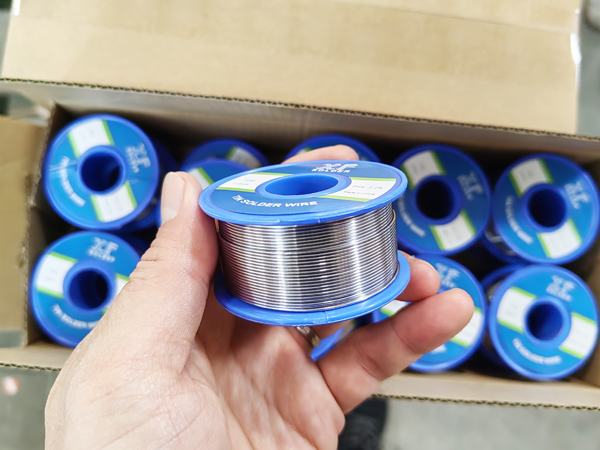
Why choose a coil of tin wire specifically for joining electrical circuits? The format and material present a suite of advantages that streamline the soldering process and enhance results.
First, the coil form factor offers exceptional practicality. A coil of tin allows for easy storage, dispensing, and use. Technicians can effortlessly pull the required length of wire without tangling, minimizing waste and saving time. This is especially important in fast-paced production environments or during lengthy repair sessions.
The performance benefits of the 60/40 alloy itself are paramount. For tin wire for circuits, reliability is non-negotiable. The 60/40 tin-lead alloy creates joints with excellent electrical conductivity and solid mechanical strength. It is less prone to issues like tin whiskers (a phenomenon with pure tin) and exhibits good resistance to thermal fatigue. The alloy's favorable wetting properties ensure that solder flows smoothly into joints, even on slightly oxidized surfaces with the aid of flux, creating a solid bond that minimizes the risk of cold solder joints—a common source of circuit failure.
Furthermore, the versatility afforded by having this alloy in a wire form cannot be overstated. A coil of tin wire 60% can be used with a wide array of soldering irons, stations, and even in some wave soldering applications with proper preparation. It gives the operator precise control over the amount of solder deposited, which is crucial for modern components with fine pitches. Whether you are working on through-hole technology, surface-mount device (SMD) rework, or creating hand-soldered wire connections, this material is adaptable and forgiving, making it a staple in toolkits for both beginners and seasoned professionals.
When it comes to delicate electronics, precision is everything. This is where the finest diameter in our range, tin wire 0.7mm, becomes an indispensable tool. This ultra-fine tin wire is engineered for applications where control and minimal solder deposition are critical.
The primary domain of tin wire 0.7mm is in soldering small surface-mount components. Think of resistors, capacitors, and ICs with pitches below 0.5mm. The small diameter allows the user to apply a tiny, controlled amount of solder directly to the pad or lead. This precision prevents bridging—where solder accidentally connects two adjacent pins—which is a major concern with miniaturized components. A coil of tin wire of this diameter is perfect for drag soldering techniques on multi-pin components, where a clean, flux-cored wire is dragged along a row of pins to create perfect joints simultaneously.
Beyond SMD work, tin wire 0.7mm is excellent for detailed rework and repair. It allows for adding solder to a single joint without affecting its neighbors, or for carefully removing solder wick during desoldering. Its lower thermal mass also means it melts quickly with a fine-tip soldering iron, reducing the heat exposure time for sensitive components. For anyone working on mobile device repair, precision instrumentation, or intricate microcontroller boards, keeping a coil of tin wire 60% in the 0.7mm diameter on hand is a best practice that safeguards the integrity of delicate circuits.
If a single diameter could be considered the workhorse of the electronics bench, it would be tin wire 1.8mm. This diameter strikes an ideal balance between capacity and control, making the coil of tin wire in 1.8mm the most commonly used size for a vast array of tasks.
Tin wire 1.8mm is exceptionally suited for standard through-hole component soldering. Its diameter provides enough solder volume to create a robust, concave fillet that fully surrounds the component lead and fills the plated through-hole, ensuring both electrical connectivity and mechanical stability. Whether you are assembling a prototype PCB, building an audio amplifier, or repairing household electronics, this size is typically the go-to choice. The tin wire 60% with lead 40% in this diameter flows readily, creating shiny, reliable joints with a standard soldering iron tip.
This diameter is also highly effective for wire-to-wire and wire-to-terminal soldering. It provides sufficient material to create strong, lasting connections on automotive wiring, power supply leads, or connector terminations. The coil of tin in 1.8mm is efficient for these tasks, as less wire needs to be fed compared to a finer gauge, speeding up the work. Furthermore, for many SMD components that are not ultra-fine-pitch, such as SOIC packages, larger resistors, or connectors, tin wire 1.8mm used with a chisel or hoof tip can be very efficient. It represents the core of the tin wire for circuits family, offering unmatched versatility for everyday electrical joinery from the hobbyist workshop to the industrial assembly line.
For tasks demanding higher solder deposition and increased joint strength, the largest diameter in our focus, tin wire 2.3mm, takes center stage. This heavy-duty tin wire is designed for applications where thermal mass is greater, or where a more substantial physical connection is required.
One of the key uses for tin wire 2.3mm is in soldering components with thick leads or large thermal pads. High-power components like voltage regulators, transistors on heatsinks, or large gauge cable lugs dissipate heat rapidly. A finer solder wire might cool and solidify before properly flowing, leading to a cold joint. The thicker coil of tin wire 60% in 2.3mm diameter delivers a larger volume of molten alloy more quickly, maintaining heat and ensuring proper wetting and a solid bond. This is crucial for the long-term reliability of power circuits, where joint failure can lead to overheating and safety hazards.
This diameter is also ideal for tasks like tinning large areas—for instance, preparing a ground plane on a chassis or coating the ends of multi-strand cables before inserting them into screw terminals. The coil of tin wire in 2.3mm allows this to be done quickly and with a consistent, thick layer of solder. In some manufacturing contexts, this diameter may be used in certain automated soldering processes or for manual soldering of large connectors and backplane assemblies. When working with tin wire for circuits that carry higher currents or are subject to mechanical stress, choosing the robust tin wire 2.3mm from your coil of tin inventory ensures the joint has the material mass needed to endure.

Choosing among tin wire 0.7mm, 1.8mm, and 2.3mm is a matter of matching the tool to the task. A simple selection guideline can help any practitioner make the right choice.
For micro-soldering, SMD components with pitches under 0.65mm, and ultra-fine rework, the tin wire 0.7mm is non-negotiable. Its precision prevents defects.
For the vast majority of general PCB work, including through-hole components, standard SMDs (like 0805, 1206 packages, SOIC, TQFP), and general wiring, the tin wire 1.8mm is the most efficient and versatile choice. It should be the default diameter in any kit.
For high-power components, large terminals, thick wires, tinning surfaces, or any connection with significant thermal mass, the tin wire 2.3mm is the appropriate tool. It ensures sufficient heat and material transfer.
A well-prepared workspace will often contain a coil of tin wire 60% in all three diameters. Many professionals also consider the flux core percentage (commonly 2% or 3%) within the wire, which aids in cleaning oxides during soldering. For the tin wire 60% with lead 40% alloy, a flux core is standard and essential for optimal results.
To maximize the benefits of your coil of tin wire, adhering to established soldering best practices is key. First, always ensure that both the soldering iron tip and the surfaces to be joined are clean. A clean, well-tinned iron tip transfers heat efficiently to the joint area. The surfaces of the component lead and PCB pad should be free of heavy oxidation or contamination.
Apply the iron tip to the joint so that it contacts both the component lead and the pad simultaneously. This heats both elements to the required temperature. Then, feed the tin wire for circuits directly into the junction of the heated lead and pad, not onto the iron tip itself. The molten solder should flow smoothly and wick around the lead, forming a concave, shiny fillet. The entire process should be completed within 1-3 seconds to avoid excessive heat transfer to the component.
When using different diameters like tin wire 0.7mm or tin wire 2.3mm, adjust your technique slightly. For fine work with 0.7mm, use a lower temperature setting (around 320-340°C) to avoid instant burning of the flux. For 2.3mm, a higher temperature (360-380°C) may be necessary to maintain the solder in a fluid state. Regardless of the diameter, working in a well-ventilated area is important, as heating solder produces fumes. Using fume extractors or breathing protection is a standard safety measure when working with any coil of tin product.
From the delicate traces of a smartphone motherboard to the robust connections in an industrial power supply, the integrity of every solder joint is foundational. The specialized coil of tin wire 60% with lead 40% provides a time-tested, reliable, and versatile solution for creating these connections. By offering key diameters—the precision of tin wire 0.7mm, the versatility of tin wire 1.8mm, and the strength of tin wire 2.3mm—this product line equips professionals and enthusiasts to tackle any circuit joinery challenge with confidence.
Understanding the properties and optimal applications for each form of this tin wire for circuits allows for smarter material selection, leading to higher quality assemblies, fewer failures, and more efficient workflows. Investing in a high-quality coil of tin wire in the appropriate diameters is an investment in the reliability and longevity of your electronic projects. As technology continues to evolve, the fundamental need for strong, conductive, and well-formed solder joints remains, securing the ongoing relevance of this essential material in the maker's and engineer's toolkit.
Contact us:
Email: xfsolder@163.com or xfsolder@gmail.com
WhatsApp/Wechat: 008613450770997
In the intricate world of electronics manufacturing and repair, the materials used for creating reliable, durable connections are as critical as the components themselves. Among these essential materials, tin wire stands as a fundamental element, particularly when alloyed for specific performance characteristics. A specialized product that has garnered significant attention in professional circles is the coil of tin wire 60% with lead 40%. This specific alloy, often supplied in convenient coils, offers a unique balance of properties that pure tin or other alloys sometimes cannot match. This article delves deep into the world of this particular soldering material, focusing on its application in circuit joinery and the practical benefits of its available diameters: tin wire 0.7mm, tin wire 1.8mm, and tin wire 2.3mm. Whether you are an electrical engineer, a PCB assembly technician, or a hobbyist working on intricate projects, understanding the nuances of this coil of tin wire can elevate the quality and reliability of your work.
Before examining its forms and applications, it's vital to understand the composition and inherent properties of this alloy. The designation tin wire 60% with lead 40% refers to a solder alloy where tin makes up 60% of the composition by weight, and lead constitutes the remaining 40%. This ratio is not arbitrary; it is close to the eutectic point of the tin-lead system, though a true eutectic solder is 63% tin and 37% lead. The 60/40 blend offers a slightly plastic range during solidification, which can be beneficial in certain hand-soldering applications as it allows a brief moment for adjusting components.
The primary role of tin in this coil of tin is to provide the metallurgical bonding capability. Tin readily alloys with copper, silver, and other common PCB and component lead materials, creating strong intermetallic bonds. The lead component, meanwhile, serves several purposes. It lowers the melting point of the alloy compared to pure tin, making it easier to work with. It also improves the "wetting" action—the ability of the molten solder to flow and adhere to surfaces—and reduces the surface tension of the molten alloy. The resulting tin wire for circuits made from this alloy is known for producing smooth, shiny fillets that indicate a good-quality solder joint. This specific coil of tin wire 60% remains a popular choice for general-purpose electronics, despite the growth of lead-free alternatives, due to its excellent workability, proven reliability over decades, and cost-effectiveness for non-restricted applications.

Why choose a coil of tin wire specifically for joining electrical circuits? The format and material present a suite of advantages that streamline the soldering process and enhance results.
First, the coil form factor offers exceptional practicality. A coil of tin allows for easy storage, dispensing, and use. Technicians can effortlessly pull the required length of wire without tangling, minimizing waste and saving time. This is especially important in fast-paced production environments or during lengthy repair sessions.
The performance benefits of the 60/40 alloy itself are paramount. For tin wire for circuits, reliability is non-negotiable. The 60/40 tin-lead alloy creates joints with excellent electrical conductivity and solid mechanical strength. It is less prone to issues like tin whiskers (a phenomenon with pure tin) and exhibits good resistance to thermal fatigue. The alloy's favorable wetting properties ensure that solder flows smoothly into joints, even on slightly oxidized surfaces with the aid of flux, creating a solid bond that minimizes the risk of cold solder joints—a common source of circuit failure.
Furthermore, the versatility afforded by having this alloy in a wire form cannot be overstated. A coil of tin wire 60% can be used with a wide array of soldering irons, stations, and even in some wave soldering applications with proper preparation. It gives the operator precise control over the amount of solder deposited, which is crucial for modern components with fine pitches. Whether you are working on through-hole technology, surface-mount device (SMD) rework, or creating hand-soldered wire connections, this material is adaptable and forgiving, making it a staple in toolkits for both beginners and seasoned professionals.
When it comes to delicate electronics, precision is everything. This is where the finest diameter in our range, tin wire 0.7mm, becomes an indispensable tool. This ultra-fine tin wire is engineered for applications where control and minimal solder deposition are critical.
The primary domain of tin wire 0.7mm is in soldering small surface-mount components. Think of resistors, capacitors, and ICs with pitches below 0.5mm. The small diameter allows the user to apply a tiny, controlled amount of solder directly to the pad or lead. This precision prevents bridging—where solder accidentally connects two adjacent pins—which is a major concern with miniaturized components. A coil of tin wire of this diameter is perfect for drag soldering techniques on multi-pin components, where a clean, flux-cored wire is dragged along a row of pins to create perfect joints simultaneously.
Beyond SMD work, tin wire 0.7mm is excellent for detailed rework and repair. It allows for adding solder to a single joint without affecting its neighbors, or for carefully removing solder wick during desoldering. Its lower thermal mass also means it melts quickly with a fine-tip soldering iron, reducing the heat exposure time for sensitive components. For anyone working on mobile device repair, precision instrumentation, or intricate microcontroller boards, keeping a coil of tin wire 60% in the 0.7mm diameter on hand is a best practice that safeguards the integrity of delicate circuits.
If a single diameter could be considered the workhorse of the electronics bench, it would be tin wire 1.8mm. This diameter strikes an ideal balance between capacity and control, making the coil of tin wire in 1.8mm the most commonly used size for a vast array of tasks.
Tin wire 1.8mm is exceptionally suited for standard through-hole component soldering. Its diameter provides enough solder volume to create a robust, concave fillet that fully surrounds the component lead and fills the plated through-hole, ensuring both electrical connectivity and mechanical stability. Whether you are assembling a prototype PCB, building an audio amplifier, or repairing household electronics, this size is typically the go-to choice. The tin wire 60% with lead 40% in this diameter flows readily, creating shiny, reliable joints with a standard soldering iron tip.
This diameter is also highly effective for wire-to-wire and wire-to-terminal soldering. It provides sufficient material to create strong, lasting connections on automotive wiring, power supply leads, or connector terminations. The coil of tin in 1.8mm is efficient for these tasks, as less wire needs to be fed compared to a finer gauge, speeding up the work. Furthermore, for many SMD components that are not ultra-fine-pitch, such as SOIC packages, larger resistors, or connectors, tin wire 1.8mm used with a chisel or hoof tip can be very efficient. It represents the core of the tin wire for circuits family, offering unmatched versatility for everyday electrical joinery from the hobbyist workshop to the industrial assembly line.
For tasks demanding higher solder deposition and increased joint strength, the largest diameter in our focus, tin wire 2.3mm, takes center stage. This heavy-duty tin wire is designed for applications where thermal mass is greater, or where a more substantial physical connection is required.
One of the key uses for tin wire 2.3mm is in soldering components with thick leads or large thermal pads. High-power components like voltage regulators, transistors on heatsinks, or large gauge cable lugs dissipate heat rapidly. A finer solder wire might cool and solidify before properly flowing, leading to a cold joint. The thicker coil of tin wire 60% in 2.3mm diameter delivers a larger volume of molten alloy more quickly, maintaining heat and ensuring proper wetting and a solid bond. This is crucial for the long-term reliability of power circuits, where joint failure can lead to overheating and safety hazards.
This diameter is also ideal for tasks like tinning large areas—for instance, preparing a ground plane on a chassis or coating the ends of multi-strand cables before inserting them into screw terminals. The coil of tin wire in 2.3mm allows this to be done quickly and with a consistent, thick layer of solder. In some manufacturing contexts, this diameter may be used in certain automated soldering processes or for manual soldering of large connectors and backplane assemblies. When working with tin wire for circuits that carry higher currents or are subject to mechanical stress, choosing the robust tin wire 2.3mm from your coil of tin inventory ensures the joint has the material mass needed to endure.

Choosing among tin wire 0.7mm, 1.8mm, and 2.3mm is a matter of matching the tool to the task. A simple selection guideline can help any practitioner make the right choice.
For micro-soldering, SMD components with pitches under 0.65mm, and ultra-fine rework, the tin wire 0.7mm is non-negotiable. Its precision prevents defects.
For the vast majority of general PCB work, including through-hole components, standard SMDs (like 0805, 1206 packages, SOIC, TQFP), and general wiring, the tin wire 1.8mm is the most efficient and versatile choice. It should be the default diameter in any kit.
For high-power components, large terminals, thick wires, tinning surfaces, or any connection with significant thermal mass, the tin wire 2.3mm is the appropriate tool. It ensures sufficient heat and material transfer.
A well-prepared workspace will often contain a coil of tin wire 60% in all three diameters. Many professionals also consider the flux core percentage (commonly 2% or 3%) within the wire, which aids in cleaning oxides during soldering. For the tin wire 60% with lead 40% alloy, a flux core is standard and essential for optimal results.
To maximize the benefits of your coil of tin wire, adhering to established soldering best practices is key. First, always ensure that both the soldering iron tip and the surfaces to be joined are clean. A clean, well-tinned iron tip transfers heat efficiently to the joint area. The surfaces of the component lead and PCB pad should be free of heavy oxidation or contamination.
Apply the iron tip to the joint so that it contacts both the component lead and the pad simultaneously. This heats both elements to the required temperature. Then, feed the tin wire for circuits directly into the junction of the heated lead and pad, not onto the iron tip itself. The molten solder should flow smoothly and wick around the lead, forming a concave, shiny fillet. The entire process should be completed within 1-3 seconds to avoid excessive heat transfer to the component.
When using different diameters like tin wire 0.7mm or tin wire 2.3mm, adjust your technique slightly. For fine work with 0.7mm, use a lower temperature setting (around 320-340°C) to avoid instant burning of the flux. For 2.3mm, a higher temperature (360-380°C) may be necessary to maintain the solder in a fluid state. Regardless of the diameter, working in a well-ventilated area is important, as heating solder produces fumes. Using fume extractors or breathing protection is a standard safety measure when working with any coil of tin product.
From the delicate traces of a smartphone motherboard to the robust connections in an industrial power supply, the integrity of every solder joint is foundational. The specialized coil of tin wire 60% with lead 40% provides a time-tested, reliable, and versatile solution for creating these connections. By offering key diameters—the precision of tin wire 0.7mm, the versatility of tin wire 1.8mm, and the strength of tin wire 2.3mm—this product line equips professionals and enthusiasts to tackle any circuit joinery challenge with confidence.
Understanding the properties and optimal applications for each form of this tin wire for circuits allows for smarter material selection, leading to higher quality assemblies, fewer failures, and more efficient workflows. Investing in a high-quality coil of tin wire in the appropriate diameters is an investment in the reliability and longevity of your electronic projects. As technology continues to evolve, the fundamental need for strong, conductive, and well-formed solder joints remains, securing the ongoing relevance of this essential material in the maker's and engineer's toolkit.
Contact us:
Email: xfsolder@163.com or xfsolder@gmail.com
WhatsApp/Wechat: 008613450770997
The selection of solder is a foundational element in the successful assembly and repair of LED lighting systems. The eutectic 63 37 sn pb solder offers an unparalleled combination of a low melting point, excellent wettability, and joint reliability that is perfectly suited to the thermal sensitivity of LED components. By understanding the specific applications for each diameter—from the precision of 63 37 sn pb solder 1.0mm to the power of 63 37 sn pb solder 2.0mm—you can dramatically improve the quality and efficiency of your work. Packaging this superior alloy as solder in a reel, specifically in a 63 37 sn pb solder 1 kg reel, adds layers of practicality, economy, and consistency that benefit everyone from the professional production engineer to the meticulous hobbyist. Therefore, equipping your workspace with the appropriate diameter of 63 37 sn pb solder for LED Lights is not just a purchase; it is an investment in achieving superior, reliable, and professional results in all you
Our comprehensive range of 63 37 leaded wire solder for electronics is meticulously designed to meet the exacting demands of modern electronics work. The eutectic 63/37 tin-lead alloy guarantees reliable, shiny joints free from cold solder defects. The availability of both 63 37 leaded solder 0.6mm for precision tasks and 63 37 leaded solder 0.9mm for versatile general-purpose work ensures you have the right tool for every job. Furthermore, our flexible packaging—from the bulk 63 37 leaded solder 454g for professionals, to the standard 63 37 leaded solder 227g, and the accessible 63 37 leaded solder 100g for beginners—means there is a perfect option for every user and budget. Elevate your soldering work with the proven performance and quality of genuine 63 37 leaded solder.
Welcome to XF Solder, a leading manufacturer from China dedicated to producing high-quality soldering materials for the global market. We specialize in creating reliable, consistent, and performance-driven solder products that meet the rigorous demands of various industries. Our flagship product, the 60 40 Solder .032'' 1 lb spool, represents the gold standard in through-hole and general-purpose electronics assembly. This article provides a detailed overview of why this specific formulation and packaging is an indispensable inventory item for distributors, a superior choice for importers seeking quality from China, and a perfect 60 40 Solder 1 lb for Wholesale operations globally. We will explore its technical specifications, unparalleled benefits, and the strategic advantage it offers in the competitive electronics supply chain.
The combination of the proven 60 sn 40 pb alloy, the convenience of three standard diameters (1.6mm, 1.8mm, 2mm), and the economic 1lb (454g) packaging makes this product an indispensable tool for anyone involved in creating or repairing electrical assemblies. Whether you are a seasoned engineer working on complex industrial systems or a hobbyist bringing your first circuit to life, this 60 40 sn pb wire solder provides the performance, reliability, and value you need to ensure every connection is perfect. Stock up on this classic soldering solution today and experience the difference that quality materials make.