|


| Quantity: | |
|---|---|
In the intricate world of electronics manufacturing and repair, the solder you choose forms the literal backbone of every connection. Among the myriad of options available, one alloy has stood the test of time for its reliability and performance: Sn60/Pb40 tin. This specific composition, comprising 60% tin (Sn) and 40% lead (Pb), represents a cornerstone material in both professional and hobbyist electronics work. Known for its excellent wetting properties, manageable melting point, and strong, reliable joints, Sn60 tin remains a preferred choice for applications where its use is permissible and advantageous. This comprehensive guide delves into the specifics of Sn60/Pb40 tin for electronics, exploring the critical importance of selecting the correct diameter—such as 60 40 tin 0.8mm, 60 40 tin 1mm, and 60 40 tin 1.2mm—and the practical considerations of spool sizes like 60 40 tin 1lb and 60 40 tin 2lbs. Whether you are assembling a prototype, performing delicate repairs, or managing a production line, understanding the nuances of this fundamental material is key to achieving consistent, high-quality results.
Sn60/Pb40 tin, commonly referred to as 60/40 solder, is a eutectic alloy. The term "eutectic" describes a specific mixture that melts and solidifies at a single, sharp temperature, unlike non-eutectic alloys which have a plastic or "mushy" range. The Sn60 tin alloy transitions at approximately 188°C (370°F). This clean transition from solid to liquid and back is one of its most valued characteristics, as it minimizes the risk of cold solder joints—a common defect where the solder disturbs before completely solidifying. The 60% tin content provides good solubility with copper, forming a strong intermetallic bond, while the 40% lead lowers the melting point, improves wetting, and reduces the surface tension of the molten solder. This combination makes 60 40 tin for electronics work exceptionally user-friendly and reliable for a vast array of through-hole and some surface-mount applications.
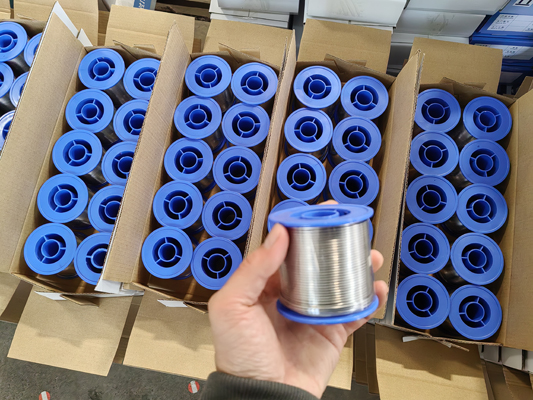
The selection of tin for electronics is a critical decision that impacts joint integrity, thermal performance, and manufacturing ease. 60 40 tin for electronics offers a balanced set of properties that have made it a benchmark in the industry for decades. Its primary advantages include a low and predictable melting point, which reduces thermal stress on sensitive components. The alloy exhibits superior wetting action, meaning it flows smoothly and adheres strongly to component leads and copper pads, creating fillets that are both electrically sound and mechanically robust. Furthermore, the solidified joints from Sn60/Pb40 tin are shiny and smooth, which is often a visual indicator of a good solder connection. While lead-free alternatives have become mandated in many commercial electronic products due to environmental regulations (like RoHS), Sn60 tin is still extensively used in exempted sectors such as aerospace, automotive, medical devices, and military hardware, where reliability is paramount. It is also a staple in hobbyist, repair, and prototyping environments where its superior workability is prized.
Choosing the correct wire diameter is as crucial as selecting the alloy itself. The right diameter ensures efficient solder delivery, prevents bridging, and promotes clean joints. The three most common sizes for hand soldering with Sn60/Pb40 tin are 60 40 tin 0.8mm, 60 40 tin 1mm, and 60 40 tin 1.2mm.
The 60 40 tin 0.8mm diameter is the go-to choice for precision work. This fine gauge is ideal for soldering small surface-mount devices (SMDs) like resistors, capacitors, and fine-pitch integrated circuits. It allows for precise control over the amount of solder deposited, significantly reducing the risk of bridging between closely spaced pins. For hobbyists working on modern, dense circuit boards or technicians performing detailed rework, a spool of Sn60 tin in 0.8mm diameter provides the necessary finesse.
For general-purpose electronics work, 60 40 tin 1mm strikes an excellent balance. It is arguably the most versatile and commonly used diameter. This size is perfectly suited for a wide range of through-hole components, including standard resistors, capacitors, LEDs, and connectors. It provides enough solder volume to create strong joints on larger pads without the need for excessive feeding, making it efficient for both prototyping and repair tasks. For anyone building or fixing general electronics, a 60 40 tin 1lb or 60 40 tin 2lbs spool in the 1mm diameter is an essential part of the toolkit.
When the job involves larger components, thicker wires, or ground planes that sink heat away quickly, 60 40 tin 1.2mm is the preferred diameter. This thicker wire delivers a higher volume of solder per unit length, making it more efficient for joining large terminals, connectors, shields, or repairing traces. It helps overcome the thermal mass of larger joints, ensuring the solder flows properly before the iron's heat dissipates. Using a finer wire on such joints can be frustrating and lead to poor connections.
Beyond diameter, the amount of solder on the spool is a practical consideration that affects cost, storage, and workflow. The two standard sizes for Sn60/Pb40 tin are 60 40 tin 1lb and 60 40 tin 2lbs spools.
A 60 40 tin 1lb spool is an excellent choice for most individual users, hobbyists, and technicians who engage in intermittent or varied projects. It offers a substantial amount of solder—enough for hundreds, if not thousands, of typical joints—without taking up excessive space on the workbench. This size is also perfect for trying out a new diameter or alloy without a large upfront commitment. For low-to-medium volume users, a 1lb spool of 60 40 tin for electronics in their preferred diameter represents the optimal balance of quantity and convenience.
For production environments, dedicated repair shops, or prolific makers, the 60 40 tin 2lbs spool offers significant advantages. Primarily, it provides better value per ounce, reducing the long-term cost of materials. It also minimizes the frequency of spool changes, which enhances productivity in a busy workflow. Storing a couple of 60 40 tin 2lbs spools ensures a steady supply of solder, preventing downtime. When you know your preferred alloy and diameter—be it 60 40 tin 1mm for general work or 60 40 tin 0.8mm for SMDs—buying in the larger 2lb quantity is a smart, economical decision.
To achieve the best results with your Sn60/Pb40 tin, following proven techniques is essential. Always start with a clean, properly tinned soldering iron tip set to the correct temperature (typically between 320°C and 380°C for this alloy). Clean the component leads and PCB pads with isopropyl alcohol if necessary. Apply the tip to the joint to heat both the pad and the lead simultaneously, then feed the Sn60 tin wire into the heated area—not directly onto the iron tip—allowing it to melt and flow freely. Use just enough solder to form a concave, shiny fillet that covers the pad and wicks up the lead. For different diameters: use a lighter touch and less feed time with 60 40 tin 0.8mm, a moderate pace with 60 40 tin 1mm, and a more generous feed with 60 40 tin 1.2mm for larger thermal masses. Proper ventilation is recommended, as with all soldering processes.
The unique properties of 60 40 tin for electronics make it suitable for specific applications. It is exceptionally well-suited for through-hole component assembly on prototype boards, audio equipment, and vintage electronics repair. Its ease of use makes it ideal for educational settings and hobbyist projects where technique is being developed. In professional contexts, it is used for high-reliability military and aerospace assemblies, where its long-term performance data is trusted. The availability in different diameters extends its utility: use 60 40 tin 0.8mm for fine-pitch ICs in repair work, 60 40 tin 1mm for general circuit building, and 60 40 tin 1.2mm for power supply sections or automotive wiring repairs.
While Sn60/Pb40 tin offers superior workability, the industry shift towards lead-free solder (like SAC305) is important to understand. Lead-free alloys typically have higher melting points, which can increase thermal stress on components. They often exhibit poorer wetting, resulting in joints that can be dull and require more skill to perfect. The primary driver for lead-free solder is environmental legislation, specifically the Restriction of Hazardous Substances (RoHS) directive. However, for applications exempt from these rules or where maximum solder joint reliability and ease of use are the top priorities—such as in many repair, prototyping, and high-rel sectors—Sn60 tin remains the technically superior choice. It is crucial to check the regulations applicable to your specific project or industry.

Success in electronics fabrication and repair hinges on using the right materials. Sn60/Pb40 60 40 tin continues to be a vital material in the electronics landscape, prized for its reliable performance and user-friendly characteristics. By carefully selecting the appropriate diameter—60 40 tin 0.8mm for precision, 60 40 tin 1mm for versatility, or 60 40 tin 1.2mm for power joints—and choosing a spool size that matches your usage pattern—be it a convenient 60 40 tin 1lb or an economical 60 40 tin 2lbs—you equip yourself for a wide range of tasks. Whether you are restocking a professional workshop or setting up your first electronics bench, investing in quality Sn60/Pb40 tin for electronics is an investment in the quality and reliability of your work. Assess your most common projects, consider the joint types you create, and build your solder inventory accordingly to ensure you always have the right wire for the job at hand.
Contact us:
Email: xfsolder@163.com or xfsolder@gmail.com
WhatsApp/Wechat: 008613450770997


 注: 建议图片大小150px*50px