Selecting the right soldering materials is foundational to successful and reliable work. Whether your project demands the precision of Tin Wire 0.8mm or the robust application of Tin Wire 1.2mm, and whether you need the economy of a Tin Wire 250g roll or the convenience of a Tin Wire 100g pack, the Tin Wire 40 60 alloy remains a trusted, high-performance choice. The Resin Cored Tin Wire format, with its built-in flux, simplifies the process and ensures clean, strong joints.
By understanding the specifics of Tin Wire Sn40 Pb60 and the importance of the Tin Wire 40% composition, you are equipped to make an informed purchase. The modern online shopping mall is the perfect venue to find this essential component, offering choice, value, and convenience. So, identify your needs in terms of quantity and diameter, and source your next high-quality Roll of Tin Wire with confidence to elevate your soldering results.
| Availability: | |
|---|---|
| Quantity: | |
In the intricate world of electronics assembly, metalwork, and repair, the quality of your solder joints can make or break a project. At the heart of a reliable soldering process is the solder wire itself. This guide focuses on a specific and highly sought-after product: the Resin Cored Tin Wire. Available in convenient Tin Wire 250g and Tin Wire 100g rolls, with popular diameters like Tin Wire 0.8mm and Tin Wire 1.2mm, this alloy is a staple for professionals and hobbyists shopping on online marketplaces. Understanding its specifications, particularly the Tin Wire 40 60 composition (also known as Tin Wire Sn40 Pb60), is key to achieving strong, durable, and conductive connections.
Resin Cored Tin Wire is a type of solder wire with a crucial internal feature: a hollow core filled with flux. As the wire melts during soldering, this flux is simultaneously released. Its primary role is to clean the metal surfaces of oxides and impurities, promoting excellent wetting and ensuring a strong metallurgical bond. The "resin" in the name typically refers to a rosin-based flux, which is mildly activated (RA) and highly effective for most common electronic applications, leaving a residue that is generally non-corrosive if left uncleaned.
The "40" in Tin Wire 40 60 denotes the tin content. Specifically, Tin Wire Sn40 Pb60 is an alloy composed of 40% tin and 60% lead. This Tin Wire 40% tin composition is one of the classic and most widely used solder alloys. It offers a balanced profile of good mechanical strength, reliable electrical conductivity, and a manageable melting point range, making it versatile for a wide array of through-hole and larger surface-mount components.
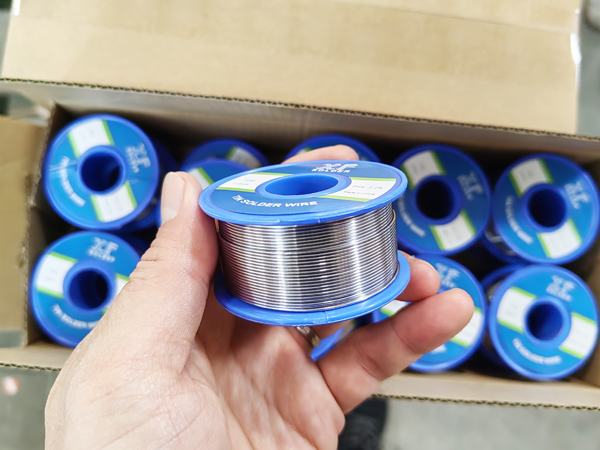
The Tin Wire 40 60 alloy provides a solid combination of properties. The 40% tin content ensures sufficient tensile and shear strength for robust joints. Electrically, it offers very low resistance, which is critical for maintaining circuit integrity. Its melting begins at around 183°C (361°F) and is fully liquid by 238°C (460°F), providing a workable "plastic range" for manual adjustment.
Why choose Tin Wire 40% tin over others? Compared to the common Sn60Pb40 (60/40) alloy, Sn40 Pb60 has a slightly higher melting point and different solidification behavior. It is often prized for its slower solidification, which can be beneficial in certain manual soldering scenarios, reducing the risk of "cold joints." It is also generally more cost-effective due to its lower tin content, while still providing performance superior to alloys with even less tin.
For frequent users, technicians, or small workshops, the Tin Wire 250g roll is the workhorse choice. This size offers an excellent balance between volume and manageability. It reduces the frequency of reorders, provides better value per gram, and is ideal for extended soldering sessions on larger projects like repairing multiple circuit boards or working on larger electrical connections.
For hobbyists, occasional users, or those working on small, precise projects, the Tin Wire 100g roll is perfectly suited. Its compact size makes it easy to store, handle, and keep on a crowded workbench. It’s also an excellent option for trying out a specific alloy or diameter without committing to a larger quantity, making it a popular listing in any online shopping mall.
Diameter is a critical choice that affects control and solder deposition. Tin Wire 0.8mm is a fine-diameter wire designed for precision electronics work. It is the go-to choice for soldering small surface-mount device (SMD) components, fine-pitch integrated circuits, and delicate connections. The thin wire allows for precise application, minimizing the risk of bridging closely spaced pins and using just the right amount of solder.
For broader, more general-purpose applications, Tin Wire 1.2mm is incredibly popular. This medium diameter is versatile enough for through-hole components, wiring connections, and larger terminals. It deposits solder more quickly than the 0.8mm variant, making it efficient for filling larger joints or working on grounding points and larger tabs. For many users, a Roll of Tin Wire in 1.2mm diameter is the first choice for day-to-day tasks.

Online shopping malls aggregate products from numerous suppliers, giving you instant access to a vast selection of Tin Wire. You can easily compare Tin Wire 100g and Tin Wire 250g rolls from different brands, read detailed specifications for Tin Wire 0.8mm and Tin Wire 1.2mm, and find the exact Tin Wire Sn40 Pb60 product you need without visiting multiple physical stores.
One of the greatest strengths of online shopping is the wealth of user-generated feedback. Before purchasing a Roll of Tin Wire, you can read reviews from other technicians and hobbyists. This provides real-world insights into the wire's performance, flux quality, and overall value, helping you avoid subpar products and find a reliable supplier for your Resin Cored Tin Wire.
Online platforms foster direct competition, often leading to better prices for standard items like Tin Wire 40 60. Furthermore, the convenience of having your chosen Tin Wire 250g or Tin Wire 100g roll delivered directly to your workspace saves significant time and effort, streamlining your project preparation.
Always store your Resin Cored Tin Wire in a cool, dry place to prevent oxidation of the alloy and degradation of the flux core. Before starting, ensure both the wire tip and the components to be soldered are clean. Tinning your iron's tip with a small amount of Tin Wire 40% alloy before and after use will prolong the tip's life.
Apply the soldering iron tip to the joint to heat both the component lead and the pad simultaneously. Then, feed the Tin Wire (whether Tin Wire 0.8mm or Tin Wire 1.2mm) into the joint, not directly onto the iron. The molten solder should flow smoothly and evenly, forming a concave, shiny fillet. For a Tin Wire Sn40 Pb60 joint, a dull or grainy appearance indicates a cold joint, which should be reheated.
When soldering with Tin Wire 40 60, which contains lead, always work in a well-ventilated area. Use fume extractors or fans to avoid inhaling flux fumes. Wash your hands thoroughly after handling the wire or soldered components. Consider using lead-free alternatives if the project will be used in food-handling equipment or by young children.
Selecting the right soldering materials is foundational to successful and reliable work. Whether your project demands the precision of Tin Wire 0.8mm or the robust application of Tin Wire 1.2mm, and whether you need the economy of a Tin Wire 250g roll or the convenience of a Tin Wire 100g pack, the Tin Wire 40 60 alloy remains a trusted, high-performance choice. The Resin Cored Tin Wire format, with its built-in flux, simplifies the process and ensures clean, strong joints.
By understanding the specifics of Tin Wire Sn40 Pb60 and the importance of the Tin Wire 40% composition, you are equipped to make an informed purchase. The modern online shopping mall is the perfect venue to find this essential component, offering choice, value, and convenience. So, identify your needs in terms of quantity and diameter, and source your next high-quality Roll of Tin Wire with confidence to elevate your soldering results.
Contact us:
Email: xfsolder@163.com or xfsolder@gmail.com
WhatsApp/Wechat: 008613450770997
In the intricate world of electronics assembly, metalwork, and repair, the quality of your solder joints can make or break a project. At the heart of a reliable soldering process is the solder wire itself. This guide focuses on a specific and highly sought-after product: the Resin Cored Tin Wire. Available in convenient Tin Wire 250g and Tin Wire 100g rolls, with popular diameters like Tin Wire 0.8mm and Tin Wire 1.2mm, this alloy is a staple for professionals and hobbyists shopping on online marketplaces. Understanding its specifications, particularly the Tin Wire 40 60 composition (also known as Tin Wire Sn40 Pb60), is key to achieving strong, durable, and conductive connections.
Resin Cored Tin Wire is a type of solder wire with a crucial internal feature: a hollow core filled with flux. As the wire melts during soldering, this flux is simultaneously released. Its primary role is to clean the metal surfaces of oxides and impurities, promoting excellent wetting and ensuring a strong metallurgical bond. The "resin" in the name typically refers to a rosin-based flux, which is mildly activated (RA) and highly effective for most common electronic applications, leaving a residue that is generally non-corrosive if left uncleaned.
The "40" in Tin Wire 40 60 denotes the tin content. Specifically, Tin Wire Sn40 Pb60 is an alloy composed of 40% tin and 60% lead. This Tin Wire 40% tin composition is one of the classic and most widely used solder alloys. It offers a balanced profile of good mechanical strength, reliable electrical conductivity, and a manageable melting point range, making it versatile for a wide array of through-hole and larger surface-mount components.

The Tin Wire 40 60 alloy provides a solid combination of properties. The 40% tin content ensures sufficient tensile and shear strength for robust joints. Electrically, it offers very low resistance, which is critical for maintaining circuit integrity. Its melting begins at around 183°C (361°F) and is fully liquid by 238°C (460°F), providing a workable "plastic range" for manual adjustment.
Why choose Tin Wire 40% tin over others? Compared to the common Sn60Pb40 (60/40) alloy, Sn40 Pb60 has a slightly higher melting point and different solidification behavior. It is often prized for its slower solidification, which can be beneficial in certain manual soldering scenarios, reducing the risk of "cold joints." It is also generally more cost-effective due to its lower tin content, while still providing performance superior to alloys with even less tin.
For frequent users, technicians, or small workshops, the Tin Wire 250g roll is the workhorse choice. This size offers an excellent balance between volume and manageability. It reduces the frequency of reorders, provides better value per gram, and is ideal for extended soldering sessions on larger projects like repairing multiple circuit boards or working on larger electrical connections.
For hobbyists, occasional users, or those working on small, precise projects, the Tin Wire 100g roll is perfectly suited. Its compact size makes it easy to store, handle, and keep on a crowded workbench. It’s also an excellent option for trying out a specific alloy or diameter without committing to a larger quantity, making it a popular listing in any online shopping mall.
Diameter is a critical choice that affects control and solder deposition. Tin Wire 0.8mm is a fine-diameter wire designed for precision electronics work. It is the go-to choice for soldering small surface-mount device (SMD) components, fine-pitch integrated circuits, and delicate connections. The thin wire allows for precise application, minimizing the risk of bridging closely spaced pins and using just the right amount of solder.
For broader, more general-purpose applications, Tin Wire 1.2mm is incredibly popular. This medium diameter is versatile enough for through-hole components, wiring connections, and larger terminals. It deposits solder more quickly than the 0.8mm variant, making it efficient for filling larger joints or working on grounding points and larger tabs. For many users, a Roll of Tin Wire in 1.2mm diameter is the first choice for day-to-day tasks.

Online shopping malls aggregate products from numerous suppliers, giving you instant access to a vast selection of Tin Wire. You can easily compare Tin Wire 100g and Tin Wire 250g rolls from different brands, read detailed specifications for Tin Wire 0.8mm and Tin Wire 1.2mm, and find the exact Tin Wire Sn40 Pb60 product you need without visiting multiple physical stores.
One of the greatest strengths of online shopping is the wealth of user-generated feedback. Before purchasing a Roll of Tin Wire, you can read reviews from other technicians and hobbyists. This provides real-world insights into the wire's performance, flux quality, and overall value, helping you avoid subpar products and find a reliable supplier for your Resin Cored Tin Wire.
Online platforms foster direct competition, often leading to better prices for standard items like Tin Wire 40 60. Furthermore, the convenience of having your chosen Tin Wire 250g or Tin Wire 100g roll delivered directly to your workspace saves significant time and effort, streamlining your project preparation.
Always store your Resin Cored Tin Wire in a cool, dry place to prevent oxidation of the alloy and degradation of the flux core. Before starting, ensure both the wire tip and the components to be soldered are clean. Tinning your iron's tip with a small amount of Tin Wire 40% alloy before and after use will prolong the tip's life.
Apply the soldering iron tip to the joint to heat both the component lead and the pad simultaneously. Then, feed the Tin Wire (whether Tin Wire 0.8mm or Tin Wire 1.2mm) into the joint, not directly onto the iron. The molten solder should flow smoothly and evenly, forming a concave, shiny fillet. For a Tin Wire Sn40 Pb60 joint, a dull or grainy appearance indicates a cold joint, which should be reheated.
When soldering with Tin Wire 40 60, which contains lead, always work in a well-ventilated area. Use fume extractors or fans to avoid inhaling flux fumes. Wash your hands thoroughly after handling the wire or soldered components. Consider using lead-free alternatives if the project will be used in food-handling equipment or by young children.
Selecting the right soldering materials is foundational to successful and reliable work. Whether your project demands the precision of Tin Wire 0.8mm or the robust application of Tin Wire 1.2mm, and whether you need the economy of a Tin Wire 250g roll or the convenience of a Tin Wire 100g pack, the Tin Wire 40 60 alloy remains a trusted, high-performance choice. The Resin Cored Tin Wire format, with its built-in flux, simplifies the process and ensures clean, strong joints.
By understanding the specifics of Tin Wire Sn40 Pb60 and the importance of the Tin Wire 40% composition, you are equipped to make an informed purchase. The modern online shopping mall is the perfect venue to find this essential component, offering choice, value, and convenience. So, identify your needs in terms of quantity and diameter, and source your next high-quality Roll of Tin Wire with confidence to elevate your soldering results.
Contact us:
Email: xfsolder@163.com or xfsolder@gmail.com
WhatsApp/Wechat: 008613450770997
The selection of solder is a foundational element in the successful assembly and repair of LED lighting systems. The eutectic 63 37 sn pb solder offers an unparalleled combination of a low melting point, excellent wettability, and joint reliability that is perfectly suited to the thermal sensitivity of LED components. By understanding the specific applications for each diameter—from the precision of 63 37 sn pb solder 1.0mm to the power of 63 37 sn pb solder 2.0mm—you can dramatically improve the quality and efficiency of your work. Packaging this superior alloy as solder in a reel, specifically in a 63 37 sn pb solder 1 kg reel, adds layers of practicality, economy, and consistency that benefit everyone from the professional production engineer to the meticulous hobbyist. Therefore, equipping your workspace with the appropriate diameter of 63 37 sn pb solder for LED Lights is not just a purchase; it is an investment in achieving superior, reliable, and professional results in all you
Our comprehensive range of 63 37 leaded wire solder for electronics is meticulously designed to meet the exacting demands of modern electronics work. The eutectic 63/37 tin-lead alloy guarantees reliable, shiny joints free from cold solder defects. The availability of both 63 37 leaded solder 0.6mm for precision tasks and 63 37 leaded solder 0.9mm for versatile general-purpose work ensures you have the right tool for every job. Furthermore, our flexible packaging—from the bulk 63 37 leaded solder 454g for professionals, to the standard 63 37 leaded solder 227g, and the accessible 63 37 leaded solder 100g for beginners—means there is a perfect option for every user and budget. Elevate your soldering work with the proven performance and quality of genuine 63 37 leaded solder.
Welcome to XF Solder, a leading manufacturer from China dedicated to producing high-quality soldering materials for the global market. We specialize in creating reliable, consistent, and performance-driven solder products that meet the rigorous demands of various industries. Our flagship product, the 60 40 Solder .032'' 1 lb spool, represents the gold standard in through-hole and general-purpose electronics assembly. This article provides a detailed overview of why this specific formulation and packaging is an indispensable inventory item for distributors, a superior choice for importers seeking quality from China, and a perfect 60 40 Solder 1 lb for Wholesale operations globally. We will explore its technical specifications, unparalleled benefits, and the strategic advantage it offers in the competitive electronics supply chain.
The combination of the proven 60 sn 40 pb alloy, the convenience of three standard diameters (1.6mm, 1.8mm, 2mm), and the economic 1lb (454g) packaging makes this product an indispensable tool for anyone involved in creating or repairing electrical assemblies. Whether you are a seasoned engineer working on complex industrial systems or a hobbyist bringing your first circuit to life, this 60 40 sn pb wire solder provides the performance, reliability, and value you need to ensure every connection is perfect. Stock up on this classic soldering solution today and experience the difference that quality materials make.