|


| Quantity: | |
|---|---|
For electronics assembly operations in Canada, consistency in solder wire performance directly affects first-pass yield, rework rates, and line throughput. XF Solder, a specialized Soldering Tin Chinese Manufacturer, supplies Soldering Tin Sn63Pb37 with a rosin core in 200g and 500g spools, available in 0.8mm and 1.2mm diameters. This eutectic alloy formulation is engineered for hand soldering and selective robotic applications where thermal repeatability matters more than lead-free compliance. Canadian PCB assembly factories that run mixed-technology lines—legacy through-hole, rework stations, and prototype batches—rely on the sharp melting point of 183°C that only a true 63/37 ratio delivers. This product page details the specifications, packaging options, application fit, and supply logistics that make XF Solder a practical sourcing choice for Canadian operations seeking a dependable Soldering Tin 63 37 partner.
Soldering Tin Sn63Pb37 is not simply “60/40 with a different label.” The 63% tin and 37% lead composition sits precisely at the eutectic point, meaning the alloy transitions directly from solid to liquid at a single temperature: 183°C. There is no plastic range where the solder is partially molten and mechanically unstable. For Canadian assembly floors that solder thermally sensitive components or use automated feeding systems, this sharp transition eliminates cold joints caused by vibration during cooling. Operators working on high-mix, low-volume runs appreciate that Soldering Tin 63 37 wets and solidifies predictably, reducing the touch-up time that erodes margins on smaller production batches.
The rosin core in this Soldering Tin with Rosin Core Sn63Pb37 is a non-corrosive, non-conductive flux that cleans oxidation from copper pads and component leads during heating. Unlike water-soluble fluxes that demand immediate washing, rosin residue can remain on the board without risking electrochemical migration in most industrial and consumer electronics environments. For Canadian factories that ship assemblies to end-users in dry or temperature-controlled settings, this eliminates an entire cleaning step—saving floor space, utility costs, and wastewater handling. The flux percentage is calibrated for consistent flow across both 0.8mm and 1.2mm diameters, ensuring that the core-to-alloy ratio remains stable from the first meter of the spool to the last.

The Soldering Tin 63 37 0.8mm variant is the workhorse for modern Canadian PCB assembly where 0402 passives, fine-pitch QFPs, and compact connectors dominate. At 0.8mm, the wire diameter allows precise deposition into tight pads without bridging adjacent pins. Hand-soldering operators use this diameter for rework on BGA perimeter rows and for touch-up on drag-soldered fine-pitch ICs. The rosin core activates quickly at typical iron tip temperatures (315–350°C), flowing into plated through-holes and surface-mount joints without the spitting or splatter that lower-grade flux cores sometimes exhibit.
When Canadian factories assemble power supplies, terminal blocks, or connectors with substantial thermal mass, the Soldering Tin 63 37 1.2mm diameter delivers the heat transfer and fill volume required. A thicker wire carries more alloy per unit length, allowing operators to complete a joint with fewer feed strokes. This reduces the time the iron contacts the pad, lowering the risk of delamination on cheaper FR-2 or CEM-1 boards. For wave-solder touch-up and selective solder robot applications, 1.2mm also feeds more reliably through motorized wire feeders without buckling.
The Soldering Tin 63 37 200g spool format is designed for Canadian factories that distribute solder wire across multiple workstations rather than centralizing it at a single bench. Rework technicians, quality inspectors, and prototype cells each keep a 200g spool at their station, reducing travel time and inventory shrinkage. The smaller format also suits incoming inspection sampling: a buyer can request a 200g spool for first-article validation before committing to a full production order. Spool dimensions are compatible with standard bench-top wire dispensers used in Canadian EMS facilities.
For higher-volume Soldering Tin 63 37 for PCB Assembly lines, the 500g spool minimizes changeover interruptions. A single 500g spool supports extended production runs on hand-solder lines and feeds smoothly through automated wire advance mechanisms. Canadian factories that run two shifts can standardize on 500g spools for the main floor while using 200g spools for satellite rework areas. Both formats use the same alloy and flux lot, so performance remains identical regardless of spool size—a detail that matters when process engineers validate solder parameters across multiple work instructions.

Canadian electronics manufacturing spans a wide range of end markets: industrial controls, medical device sub-assemblies, telecommunications hardware, and automotive aftermarket electronics. Many of these segments still permit leaded solder for non-export or exempt applications, and some specifically prefer Soldering Tin Sn63Pb37 for its repairability and lower process temperature compared to SAC305. The 183°C melting point reduces thermal stress on components that are rated only to 240°C, extending the margin for operators who may occasionally linger on a joint. For Canadian factories that repair or refurbish legacy equipment, 63/37 rosin core wire is often the only alloy specified in the original service documentation. XF Solder’s formulation meets the purity and flux consistency requirements that these mixed-technology operations demand.
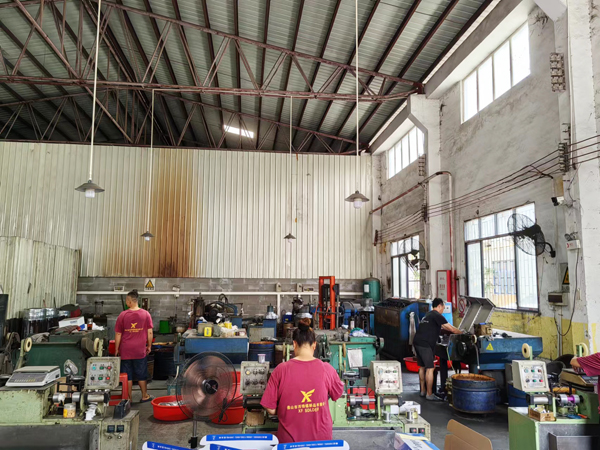
As a Soldering Tin Chinese Manufacturer, XF Solder operates extrusion and drawing lines that monitor core continuity and diameter tolerance in real time. For Canadian buyers, the practical concerns are lead time, documentation, and consistency across shipments. Solder wire falls under Canadian tariff classifications for tin alloys and tin wire, with most MFN duty rates at free or low single digits depending on the specific tariff item and origin documentation. XF Solder provides commercial invoices, packing lists, and material declarations suitable for Canadian customs clearance. Shipments consolidate 200g and 500g spools on standard pallets, and the factory maintains batch traceability so Canadian quality teams can correlate incoming inspection results with production lots. For factories that require pre-shipment samples, XF Solder supplies 200g spools for bench testing before bulk orders are released.
Q1: Is Soldering Tin Sn63Pb37 with rosin core suitable for lead-free soldering processes?
No. Soldering Tin Sn63Pb37 contains approximately 37% lead by weight. It is a leaded alloy and must not be used in processes or products that are required to comply with lead-free directives such as RoHS. Canadian factories typically use 63/37 for exempt applications, defense work, repair of legacy equipment, or internal prototypes that are not placed on regulated markets. If your assembly is destined for the EU or for customers with contractual lead-free requirements, specify a SAC305 or Sn99.3Cu0.7 alloy instead.
Q2: What is the shelf life of Soldering Tin with Rosin Core 63 37, and how should it be stored in a Canadian warehouse?
Under proper storage conditions—sealed in original packaging, away from moisture and extreme temperature swings—the wire maintains optimal performance for up to 24 months from the date of manufacture. Canadian warehouses should store spools in a dry area between 10°C and 30°C. Avoid leaving spools on loading docks during winter months, as condensation can form when cold wire is brought into a warm production area. If a spool has been exposed to humid air for extended periods, a short length should be discarded before production use to prevent flux degradation.
Q3: Can I mix 0.8mm and 1.2mm diameters on the same purchase order from XF Solder?
Yes. Soldering Tin 63 37 0.8mm and Soldering Tin 63 37 1.2mm can be combined on a single order, and both are available in 200g and 500g spool formats. Canadian factories often order a mixed pallet: 500g spools in 1.2mm for the main through-hole line, and 200g spools in 0.8mm for fine-pitch rework stations. XF Solder labels each spool with alloy, diameter, weight, and lot number to simplify receiving inspection and line-side stocking.
Q4: How does XF Solder control flux core continuity in Soldering Tin with Rosin Core Sn63Pb37?
Core continuity is monitored during extrusion using in-line inspection that detects voids or interruptions in the rosin core. A discontinuous core causes unpredictable flux delivery—some joints receive excess flux and spatter, while others lack sufficient activation and produce dull, weak fillets. XF Solder’s drawing process maintains a consistent core-to-alloy ratio across the entire spool length. Canadian buyers who have experienced erratic performance from low-cost suppliers often cite core voids as the root cause; XF Solder addresses this through process control rather than post-production sampling alone.
Q5: What documentation does XF Solder provide for Canadian customs and quality audits?
Each shipment includes a commercial invoice, packing list, and certificate of analysis stating the alloy composition (Sn63/Pb37), flux type (rosin), and diameter tolerance. Material safety data sheets are available in English for Canadian workplace safety compliance. For factories with supplier quality programs, XF Solder can provide batch-specific inspection records and, for qualified buyers, third-party test reports on request. The Soldering Tin Chinese Manufacturer designation means buyers deal directly with the production facility rather than a trading intermediary, which simplifies corrective action communication if a deviation ever occurs.
Choosing solder wire for a Canadian PCB assembly factory involves balancing alloy performance, operator usability, inventory logistics, and supplier reliability. The Soldering Tin Sn63Pb37 rosin core wire from XF Solder—available in Soldering Tin 63 37 200g and Soldering Tin 63 37 500g spools, with Soldering Tin 63 37 0.8mm and Soldering Tin 63 37 1.2mm diameters—addresses each of these dimensions without unnecessary complexity. The eutectic alloy delivers the thermal predictability that hand-soldering and rework stations require, the rosin core eliminates post-clean steps for most applications, and the dual spool formats support both high-volume lines and distributed workstation stocking. For Canadian buyers seeking a direct Soldering Tin Chinese Manufacturer relationship with batch traceability and export documentation, XF Solder provides a straightforward supply path for this established alloy.
Contact us:
Email: xfsolder@163.com or xfsolder@gmail.com
WhatsApp/Wechat: +8613450770997


 注: 建议图片大小150px*50px