| Availability: | |
|---|---|
| Quantity: | |
Welcome to the definitive resource for one of the most fundamental tools in electronics and metalworking: the roll of lead solder. Specifically, we will delve deep into the 40 60 solder for electronics, a classic and highly reliable alloy. Whether you are a seasoned engineer, a hobbyist building your first circuit, or a professional in plumbing or stained glass, understanding your materials is key to success. This comprehensive guide will answer all your questions about this specific product—a robust roll of solder 40 60 that comes in practical 1mm, 2mm, and 3mm diameters, all packaged in a substantial 1000g (1kg) spool. We will explore its composition, applications, advantages, and why it remains a top choice for countless precision tasks.
The term 40 60 solder for electronics refers to the specific alloy composition of the solder wire. In this case, the numbers 40 and 60 represent the percentage of the two primary metals in the alloy: Tin (Sn) and Lead (Pb). Therefore, a 40 60 lead solder for electronics is composed of 40% Tin and 60% Lead. This ratio is crucial as it directly determines the solder's melting point, fluidity, and final strength. The 40/60 blend creates a eutectic-like property, meaning it has a distinct plastic or "pasty" range between its solidus and liquidus temperatures, which can be beneficial for certain manual soldering techniques where a bit more working time is needed.
When we talk about a roll of solder, we're describing more than just a coil of metal wire. A high-quality roll of lead solder is an engineered product. Our featured roll of solder 40 60 is meticulously manufactured to ensure consistent diameter, uniform alloy composition, and a clean, flux-cored interior. This specific product is a heavyweight roll of solder for electronics and other applications, offering a substantial 1000g of material on a single, easy-to-use spool. This eliminates the frequent need for reloading, enhancing workflow efficiency for both production environments and prolonged DIY projects.
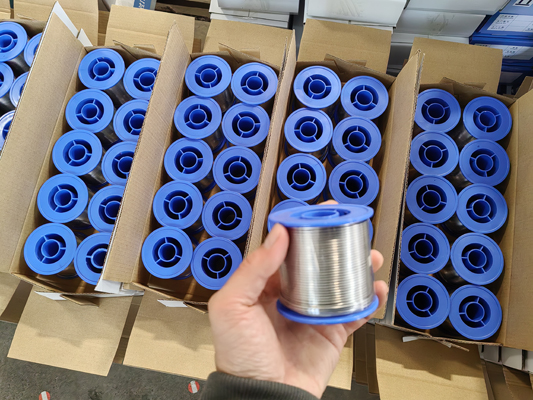
The 40 60 solder for electronics has stood the test of time for several compelling reasons. Its 40% Tin content provides excellent wetting properties, meaning it flows smoothly and adheres strongly to copper, brass, and other common metals. The 60% Lead content gives the alloy superior mechanical strength and a lower melting point compared to higher-tin alloys. This combination results in reliable, shiny, and durable solder joints. While lead-free alternatives exist, many professionals still prefer 40 60 lead solder for electronics for its superior workability, especially for intricate or sensitive components that may be damaged by the higher temperatures required by lead-free solders.
Opting for a 40 60 solder 1000g package offers significant practical and economic advantages. For frequent users, buying in a larger 1kg quantity is far more cost-effective than purchasing multiple small 50g or 100g reels. A large roll of solder ensures you have a consistent batch of material for a long-term project, guaranteeing uniform results from start to finish. There's no worse feeling than running out of solder mid-way through a critical job. The substantial roll of solder 40 60 in the 1000g size provides peace of mind and uninterrupted productivity, making it the go-to choice for workshops, repair centers, and serious enthusiasts.
The diameter of your solder wire is not a trivial detail; it is critical to achieving clean, precise, and effective joints. Using the wrong size can lead to messy connections, cold solder joints, or even damage to delicate components. Our roll of lead solder is available in three of the most versatile diameters: 1mm, 2mm, and 3mm.
The 40 60 solder 1mm variant is the finest option, designed for high-precision, delicate work. This ultra-thin diameter is ideal for:
Surface-Mount Technology (SMT) components.
Fine-pitch Integrated Circuits (ICs).
Repairing small connections on printed circuit boards (PCBs).
Detailed work in jewelry making and model building.
The 40 60 solder 1mm allows for exceptional control, delivering a minimal amount of solder exactly where it's needed without creating bridges or blobs.
If you could only have one diameter, the 40 60 solder 2mm would be the most recommended choice. It strikes a perfect balance between precision and deposition rate, making it incredibly versatile. The 40 60 solder 2mm is perfectly suited for:
Through-hole components on PCBs.
General wiring and cable soldering.
Automotive electrical repairs.
Assembling and repairing household appliances.
For most hobbyists and technicians, the 40 60 solder 2mm is the workhorse that handles 80% of all common soldering tasks with ease.
When the project involves thicker wires, larger terminals, or metal sheets, the 40 60 solder 3mm is the optimal tool. Its larger diameter allows for a much higher volume of solder to be deposited quickly. The primary applications for 40 60 solder 3mm include:
Plumbing joints for copper pipes (with appropriate flux).
Stained glass artwork assembly.
Soldering heavy-gauge electrical wires and lugs.
Radiator and metal gutter repairs.
Using a 40 60 solder 3mm for these larger tasks drastically reduces soldering time and ensures a strong, substantial fillet for a robust mechanical connection.

This is a critical question in today's market. The primary advantage of our roll of solder 40 60 over common lead-free alloys (like Sn99.3Cu0.7 or Sn96.5Ag3.0Cu0.5) is its superior solderability. Lead-based solder has a lower melting point, flows more freely, and produces shinier, more visually appealing joints with a lower risk of "tombstoning" or cold joints. The 40 60 lead solder for electronics is also generally less expensive. However, it is imperative to acknowledge that due to the lead content, its use is restricted or banned in commercial electronics in many regions under regulations like RoHS. Therefore, it is essential to use this product in well-ventilated areas, wash hands after use, and reserve it for applications where lead is permitted, such as prototyping, repair of non-commercial equipment, automotive, aerospace, or plumbing and artistic endeavors.
Simply having a high-quality roll of solder for electronics is not enough; technique is paramount. First, always ensure the surfaces to be soldered are clean and free of oxidation. Use a fine-grit sandpaper or a specialized cleaning pen on component leads and PCB pads. Apply a suitable flux if your solder's core flux is not sufficient for the task, especially for non-electronics work. A clean surface is the foundation of a strong bond.
The classic technique is "heat the work, not the solder." Touch the hot soldering iron tip to both the component lead and the PCB pad simultaneously for a second or two. Then, feed the 40 60 solder 2mm (or your chosen diameter) into the junction, not directly onto the iron tip. The heated metal should melt the solder, which will then flow smoothly and wick into the joint. A good joint will be concave, shiny, and smooth. A dull, lumpy, or blobby joint indicates a "cold solder" and should be reworked.
This specific product—a 40 60 solder 1000g roll available in multiple diameters—is designed for a wide range of users who require reliability and volume. The ideal user includes:
Electronics Hobbyists and Makers: Building robots, amplifiers, or Arduino projects.
PCB Repair Technicians: Fixing everything from game consoles to industrial control boards.
Stained Glass and Mosaic Artists: Creating strong, lasting bonds in their artwork.
Plumbers: For sweating copper pipes (with acid-core flux, which this product may or may not contain).
Automotive and Aviation Mechanics: For electrical repairs and shielding.
IT and Telecom Engineers: Maintaining and repairing server and network hardware.
In summary, the roll of lead solder 40 60 in 1mm, 2mm, and 3mm diameters, packaged as a substantial 40 60 solder 1000g spool, represents a premium, professional-grade material. Its 40/60 tin-lead composition offers exceptional wetting, strength, and a manageable melting point. The availability of different diameters ensures you have the perfect tool for any job, from the most delicate micro-soldering with 40 60 solder 1mm to heavy-duty metal joining with 40 60 solder 3mm. If your projects allow for the use of lead-based solder and you value proven performance, ease of use, and the economy of a large roll of solder, this product is an outstanding and reliable investment that will serve you flawlessly for countless projects to come.
Contact us:
Email: xfsolder@163.com or xfsolder@gmail.com
WhatsApp/Wechat: 008613450770997
Welcome to the definitive resource for one of the most fundamental tools in electronics and metalworking: the roll of lead solder. Specifically, we will delve deep into the 40 60 solder for electronics, a classic and highly reliable alloy. Whether you are a seasoned engineer, a hobbyist building your first circuit, or a professional in plumbing or stained glass, understanding your materials is key to success. This comprehensive guide will answer all your questions about this specific product—a robust roll of solder 40 60 that comes in practical 1mm, 2mm, and 3mm diameters, all packaged in a substantial 1000g (1kg) spool. We will explore its composition, applications, advantages, and why it remains a top choice for countless precision tasks.
The term 40 60 solder for electronics refers to the specific alloy composition of the solder wire. In this case, the numbers 40 and 60 represent the percentage of the two primary metals in the alloy: Tin (Sn) and Lead (Pb). Therefore, a 40 60 lead solder for electronics is composed of 40% Tin and 60% Lead. This ratio is crucial as it directly determines the solder's melting point, fluidity, and final strength. The 40/60 blend creates a eutectic-like property, meaning it has a distinct plastic or "pasty" range between its solidus and liquidus temperatures, which can be beneficial for certain manual soldering techniques where a bit more working time is needed.
When we talk about a roll of solder, we're describing more than just a coil of metal wire. A high-quality roll of lead solder is an engineered product. Our featured roll of solder 40 60 is meticulously manufactured to ensure consistent diameter, uniform alloy composition, and a clean, flux-cored interior. This specific product is a heavyweight roll of solder for electronics and other applications, offering a substantial 1000g of material on a single, easy-to-use spool. This eliminates the frequent need for reloading, enhancing workflow efficiency for both production environments and prolonged DIY projects.

The 40 60 solder for electronics has stood the test of time for several compelling reasons. Its 40% Tin content provides excellent wetting properties, meaning it flows smoothly and adheres strongly to copper, brass, and other common metals. The 60% Lead content gives the alloy superior mechanical strength and a lower melting point compared to higher-tin alloys. This combination results in reliable, shiny, and durable solder joints. While lead-free alternatives exist, many professionals still prefer 40 60 lead solder for electronics for its superior workability, especially for intricate or sensitive components that may be damaged by the higher temperatures required by lead-free solders.
Opting for a 40 60 solder 1000g package offers significant practical and economic advantages. For frequent users, buying in a larger 1kg quantity is far more cost-effective than purchasing multiple small 50g or 100g reels. A large roll of solder ensures you have a consistent batch of material for a long-term project, guaranteeing uniform results from start to finish. There's no worse feeling than running out of solder mid-way through a critical job. The substantial roll of solder 40 60 in the 1000g size provides peace of mind and uninterrupted productivity, making it the go-to choice for workshops, repair centers, and serious enthusiasts.
The diameter of your solder wire is not a trivial detail; it is critical to achieving clean, precise, and effective joints. Using the wrong size can lead to messy connections, cold solder joints, or even damage to delicate components. Our roll of lead solder is available in three of the most versatile diameters: 1mm, 2mm, and 3mm.
The 40 60 solder 1mm variant is the finest option, designed for high-precision, delicate work. This ultra-thin diameter is ideal for:
Surface-Mount Technology (SMT) components.
Fine-pitch Integrated Circuits (ICs).
Repairing small connections on printed circuit boards (PCBs).
Detailed work in jewelry making and model building.
The 40 60 solder 1mm allows for exceptional control, delivering a minimal amount of solder exactly where it's needed without creating bridges or blobs.
If you could only have one diameter, the 40 60 solder 2mm would be the most recommended choice. It strikes a perfect balance between precision and deposition rate, making it incredibly versatile. The 40 60 solder 2mm is perfectly suited for:
Through-hole components on PCBs.
General wiring and cable soldering.
Automotive electrical repairs.
Assembling and repairing household appliances.
For most hobbyists and technicians, the 40 60 solder 2mm is the workhorse that handles 80% of all common soldering tasks with ease.
When the project involves thicker wires, larger terminals, or metal sheets, the 40 60 solder 3mm is the optimal tool. Its larger diameter allows for a much higher volume of solder to be deposited quickly. The primary applications for 40 60 solder 3mm include:
Plumbing joints for copper pipes (with appropriate flux).
Stained glass artwork assembly.
Soldering heavy-gauge electrical wires and lugs.
Radiator and metal gutter repairs.
Using a 40 60 solder 3mm for these larger tasks drastically reduces soldering time and ensures a strong, substantial fillet for a robust mechanical connection.

This is a critical question in today's market. The primary advantage of our roll of solder 40 60 over common lead-free alloys (like Sn99.3Cu0.7 or Sn96.5Ag3.0Cu0.5) is its superior solderability. Lead-based solder has a lower melting point, flows more freely, and produces shinier, more visually appealing joints with a lower risk of "tombstoning" or cold joints. The 40 60 lead solder for electronics is also generally less expensive. However, it is imperative to acknowledge that due to the lead content, its use is restricted or banned in commercial electronics in many regions under regulations like RoHS. Therefore, it is essential to use this product in well-ventilated areas, wash hands after use, and reserve it for applications where lead is permitted, such as prototyping, repair of non-commercial equipment, automotive, aerospace, or plumbing and artistic endeavors.
Simply having a high-quality roll of solder for electronics is not enough; technique is paramount. First, always ensure the surfaces to be soldered are clean and free of oxidation. Use a fine-grit sandpaper or a specialized cleaning pen on component leads and PCB pads. Apply a suitable flux if your solder's core flux is not sufficient for the task, especially for non-electronics work. A clean surface is the foundation of a strong bond.
The classic technique is "heat the work, not the solder." Touch the hot soldering iron tip to both the component lead and the PCB pad simultaneously for a second or two. Then, feed the 40 60 solder 2mm (or your chosen diameter) into the junction, not directly onto the iron tip. The heated metal should melt the solder, which will then flow smoothly and wick into the joint. A good joint will be concave, shiny, and smooth. A dull, lumpy, or blobby joint indicates a "cold solder" and should be reworked.
This specific product—a 40 60 solder 1000g roll available in multiple diameters—is designed for a wide range of users who require reliability and volume. The ideal user includes:
Electronics Hobbyists and Makers: Building robots, amplifiers, or Arduino projects.
PCB Repair Technicians: Fixing everything from game consoles to industrial control boards.
Stained Glass and Mosaic Artists: Creating strong, lasting bonds in their artwork.
Plumbers: For sweating copper pipes (with acid-core flux, which this product may or may not contain).
Automotive and Aviation Mechanics: For electrical repairs and shielding.
IT and Telecom Engineers: Maintaining and repairing server and network hardware.
In summary, the roll of lead solder 40 60 in 1mm, 2mm, and 3mm diameters, packaged as a substantial 40 60 solder 1000g spool, represents a premium, professional-grade material. Its 40/60 tin-lead composition offers exceptional wetting, strength, and a manageable melting point. The availability of different diameters ensures you have the perfect tool for any job, from the most delicate micro-soldering with 40 60 solder 1mm to heavy-duty metal joining with 40 60 solder 3mm. If your projects allow for the use of lead-based solder and you value proven performance, ease of use, and the economy of a large roll of solder, this product is an outstanding and reliable investment that will serve you flawlessly for countless projects to come.
Contact us:
Email: xfsolder@163.com or xfsolder@gmail.com
WhatsApp/Wechat: 008613450770997
The selection of solder is a foundational element in the successful assembly and repair of LED lighting systems. The eutectic 63 37 sn pb solder offers an unparalleled combination of a low melting point, excellent wettability, and joint reliability that is perfectly suited to the thermal sensitivity of LED components. By understanding the specific applications for each diameter—from the precision of 63 37 sn pb solder 1.0mm to the power of 63 37 sn pb solder 2.0mm—you can dramatically improve the quality and efficiency of your work. Packaging this superior alloy as solder in a reel, specifically in a 63 37 sn pb solder 1 kg reel, adds layers of practicality, economy, and consistency that benefit everyone from the professional production engineer to the meticulous hobbyist. Therefore, equipping your workspace with the appropriate diameter of 63 37 sn pb solder for LED Lights is not just a purchase; it is an investment in achieving superior, reliable, and professional results in all you
Our comprehensive range of 63 37 leaded wire solder for electronics is meticulously designed to meet the exacting demands of modern electronics work. The eutectic 63/37 tin-lead alloy guarantees reliable, shiny joints free from cold solder defects. The availability of both 63 37 leaded solder 0.6mm for precision tasks and 63 37 leaded solder 0.9mm for versatile general-purpose work ensures you have the right tool for every job. Furthermore, our flexible packaging—from the bulk 63 37 leaded solder 454g for professionals, to the standard 63 37 leaded solder 227g, and the accessible 63 37 leaded solder 100g for beginners—means there is a perfect option for every user and budget. Elevate your soldering work with the proven performance and quality of genuine 63 37 leaded solder.
Welcome to XF Solder, a leading manufacturer from China dedicated to producing high-quality soldering materials for the global market. We specialize in creating reliable, consistent, and performance-driven solder products that meet the rigorous demands of various industries. Our flagship product, the 60 40 Solder .032'' 1 lb spool, represents the gold standard in through-hole and general-purpose electronics assembly. This article provides a detailed overview of why this specific formulation and packaging is an indispensable inventory item for distributors, a superior choice for importers seeking quality from China, and a perfect 60 40 Solder 1 lb for Wholesale operations globally. We will explore its technical specifications, unparalleled benefits, and the strategic advantage it offers in the competitive electronics supply chain.
The combination of the proven 60 sn 40 pb alloy, the convenience of three standard diameters (1.6mm, 1.8mm, 2mm), and the economic 1lb (454g) packaging makes this product an indispensable tool for anyone involved in creating or repairing electrical assemblies. Whether you are a seasoned engineer working on complex industrial systems or a hobbyist bringing your first circuit to life, this 60 40 sn pb wire solder provides the performance, reliability, and value you need to ensure every connection is perfect. Stock up on this classic soldering solution today and experience the difference that quality materials make.