| Availability: | |
|---|---|
| Quantity: | |
In the intricate world of electronics manufacturing and repair, the quality of your solder can mean the difference between a flawless, long-lasting circuit and a faulty, unreliable connection. For professionals and hobbyists engaged in Surface Mount Device (SMD) welding, selecting the right soldering material is paramount. This comprehensive guide delves into the exceptional qualities and applications of the Tin Solder Wire Roll 40 60 Sn40 Pb60 0.8mm 500g, a premier choice for demanding electronic assembly tasks. We will explore its chemical composition, physical properties, ideal use cases, and the distinct advantages it offers for SMD work, providing you with all the information needed to make an informed decision for your projects.
Before diving into the specifics of our featured product, it's crucial to understand the fundamental role a Solder Roll plays. Soldering is the process of joining two or more electronic components together by melting a filler metal, known as solder, into the joint. The solder wire, conveniently supplied on a spool or roll, is the primary form factor for manual and automated soldering applications. A high-quality Solder Wire Roll ensures consistent feed, predictable melting behavior, and reliable electrical and mechanical bonds. The choice of solder alloy, its diameter, and the presence of a flux core are critical factors that directly impact the efficiency and quality of the soldering process, especially when dealing with the miniature scale of SMD components.
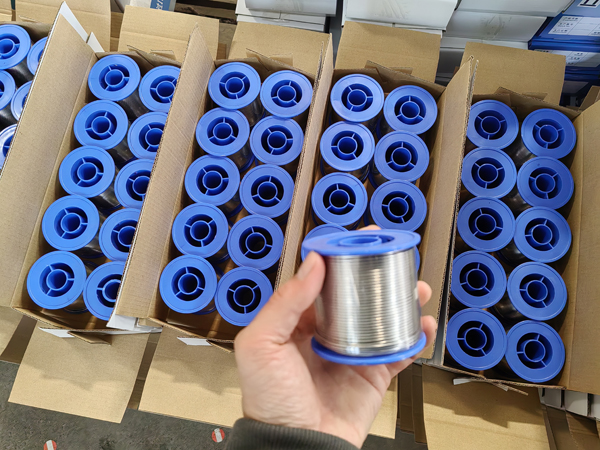
At the heart of this discussion is a specific and highly effective alloy: the Tin Solder Roll 40 60. This designation, Sn40 Pb60, reveals its precise composition: 40% Tin (Sn) and 60% Lead (Pb). This classic eutectic alloy has been a cornerstone of electronics manufacturing for decades due to its superior performance characteristics. The Tin Solder Wire Roll 40 60 builds upon this reliable formula by presenting it in a convenient, easy-to-use wire form. This specific combination of metals creates an alloy with a well-defined melting point and excellent wetting properties, which refers to its ability to flow smoothly and adhere to component leads and PCB pads. For many applications where the RoHS (Restriction of Hazardous Substances) directive does not apply, such as in automotive, aerospace, or certain industrial electronics, the Tin Solder Roll 40 60 remains the gold standard for reliability.
To fully appreciate the capabilities of this product, let's break down its key physical specifications:
Alloy Composition: Sn40 Pb60 (40% Tin, 60% Lead). This ratio is a near-eutectic formulation, offering a relatively narrow plastic range for clean solidification.
Diameter: 0.8mm. This is an ideal gauge for a wide range of SMD work, providing a good balance between solder deposit control and feed rate.
Weight: 500g. This standard roll size offers substantial capacity for multiple projects or production runs without being overly cumbersome.
Form: Wire on a spool. This allows for tangle-free unspooling and is compatible with most manual soldering irons and automated soldering equipment.
The combination of these specs makes the Tin Solder Wire Roll 40 60 0.8mm a versatile and practical choice for technicians.

Why is the 0.8mm diameter so well-suited for SMD welding? Surface Mount Devices are characterized by their small size and closely spaced pins. Precision is non-negotiable. A solder wire that is too thick can lead to several problems:
Excessive Solder Application: It becomes difficult to control the amount of solder melted, leading to blobs that can cause short circuits between adjacent pins or pads.
Bridging: The risk of creating unintended solder connections (bridges) between closely spaced SMD component leads increases significantly.
Thermal Overload: Delivering a large volume of solder requires more heat and time, which can expose sensitive SMD components to potentially damaging temperatures.
The Tin Solder Wire Roll 40 60 0.8mm elegantly solves these issues. Its fine yet robust diameter allows the operator to feed a controlled amount of solder directly to the joint. This promotes clean, precise fillets—the concave curves of solder at the junction of the component and the PCB pad—without the risk of bridging. The 0.8mm wire melts quickly with the application of a soldering iron, minimizing the heat transfer to the component itself. This makes the Tin Solder Wire Roll 40 60 an indispensable tool for working with fine-pitch ICs, resistors, capacitors, and other common SMD packages.
The choice of the Sn40 Pb60 alloy is not arbitrary; it is driven by a set of performance benefits that are hard to match with lead-free alternatives. Understanding these advantages explains why this Solder Roll 40 60 remains popular in many sectors.
Wetting is the ability of molten solder to spread evenly over a metal surface, a critical factor for forming a strong metallurgical bond. The Tin Solder Roll 40 60 exhibits excellent wetting properties. It flows smoothly and readily onto copper pads and component leads, creating strong, reliable intermetallic layers. This results in joints that are not only electrically sound but also mechanically robust, capable of withstanding vibration and thermal cycling.
The Sn40 Pb60 alloy has a melting range that is significantly lower than most common lead-free solders (which typically melt around 217-227°C). This Solder Wire Roll 40 60 melts at approximately 183-188°C. A lower working temperature offers multiple benefits:
Reduced Thermal Stress: Sensitive SMD components are less likely to be damaged by heat.
Longer Tip Life: Soldering iron tips degrade slower at lower operating temperatures.
Energy Efficiency: Less power is required to melt the solder.
The Tin Solder Roll 40 60 is renowned for its user-friendliness. It produces shiny, smooth solder joints that are easy to inspect visually. The alloy is less prone to defects like tombstoning (where a chip component stands up on one end) and solder balling, which are more common with some lead-free alloys that have higher surface tension. This predictability makes the Tin Solder Wire Roll 40 60 a favorite for both novice hobbyists and seasoned professionals who value consistency and a high first-pass yield.
The Tin Solder Roll 40 60 500g package size is strategically chosen to offer optimal practicality and value. A 500g roll represents a substantial amount of material, sufficient for extensive prototyping, repair work, or small to medium-scale production batches. It strikes a perfect balance between volume and manageability. A roll of this size is cost-effective on a per-gram basis compared to smaller packages, reducing the frequency of reorders and associated downtime. Furthermore, the robust Tin Solder Wire Roll 40 60 500g spool is designed to prevent tangling and kinking, ensuring a smooth, consistent feed from the first gram to the last, which is essential for maintaining a steady workflow and high-quality results.
Achieving perfect SMD joints with your Tin Solder Wire Roll requires the right technique. Follow this step-by-step guide for best results.
Gather Your Tools: You will need a temperature-controlled soldering iron, a fine tip (such as a chisel or conical tip), the Tin Solder Wire Roll 40 60 0.8mm, flux (if not already cored in your wire), tweezers, and soldering wick for any corrections.
Clean the PCB: Ensure the circuit board pads are clean and free of oxidation. Use isopropyl alcohol if necessary.
Set the Temperature: Set your soldering iron to a temperature between 320°C and 350°C (608°F - 662°F). This provides a good margin above the solder's melting point for efficient heat transfer without excessive oxidation.
Component Placement: Use tweezers to accurately place the SMD component on its pads. A small amount of adhesive or tacky flux can help hold it in place.
Tack One Corner: Apply a tiny amount of solder from your Solder Wire Roll to one pad to tack one end of the component in place. This secures it for the final soldering.
Soldering the Remaining Leads: Bring the soldering iron tip to the junction of the pad and the component lead. Then, feed a small amount of the Tin Solder Wire Roll into the joint. The solder should flow smoothly and wick around the lead, forming a concave fillet. The 0.8mm diameter gives you excellent control here.
Complete the Joint: Remove the solder wire first, then the iron, allowing the joint to cool undisturbed.
Inspect the Joint: A good joint will be shiny, smooth, and show a clear fillet on both the pad and the component lead. There should be no bridges to adjacent pads or pins.
While lead-free solders are mandated for consumer electronics in many regions, understanding the comparison is valuable. The primary advantage of lead-free alloys (like SAC305) is their environmental and health compliance. However, the Tin Solder Roll 40 60 often outperforms them in several operational aspects:
Wetting: As discussed, SnPb alloys generally wet better than lead-free ones.
Melting Point: The lower melting point of the Solder Roll 40 60 is gentler on components and equipment.
Visual Inspection: SnPb joints are typically shinier and easier to inspect for quality than the duller, grainy appearance of lead-free joints.
Cost: Traditionally, tin-lead solder has been more cost-effective than many complex lead-free formulations.
Therefore, for applications where RoHS compliance is not required, the Tin Solder Wire Roll 40 60 offers a compelling combination of performance, reliability, and ease of use.
In summary, the Tin Solder Wire Roll 40 60 Sn40 Pb60 0.8mm 500g is a meticulously engineered product designed to excel in the challenging environment of SMD welding. Its specific 40/60 tin-lead composition delivers unparalleled wetting, a low melting point, and user-friendly characteristics that minimize defects. The 0.8mm diameter provides the precision necessary for delicate SMD work, while the 500g roll offers substantial value and convenience. Whether you are a professional working on critical aerospace or automotive systems, or an electronics enthusiast building complex prototypes, this Solder Wire Roll provides the reliability, consistency, and high performance required to create perfect, durable solder joints every time. By choosing this product, you are not just selecting a solder; you are investing in the quality and longevity of your electronic assemblies.
Contact us:
Email: xfsolder@163.com or xfsolder@gmail.com
WhatsApp/Wechat: 008613450770997
In the intricate world of electronics manufacturing and repair, the quality of your solder can mean the difference between a flawless, long-lasting circuit and a faulty, unreliable connection. For professionals and hobbyists engaged in Surface Mount Device (SMD) welding, selecting the right soldering material is paramount. This comprehensive guide delves into the exceptional qualities and applications of the Tin Solder Wire Roll 40 60 Sn40 Pb60 0.8mm 500g, a premier choice for demanding electronic assembly tasks. We will explore its chemical composition, physical properties, ideal use cases, and the distinct advantages it offers for SMD work, providing you with all the information needed to make an informed decision for your projects.
Before diving into the specifics of our featured product, it's crucial to understand the fundamental role a Solder Roll plays. Soldering is the process of joining two or more electronic components together by melting a filler metal, known as solder, into the joint. The solder wire, conveniently supplied on a spool or roll, is the primary form factor for manual and automated soldering applications. A high-quality Solder Wire Roll ensures consistent feed, predictable melting behavior, and reliable electrical and mechanical bonds. The choice of solder alloy, its diameter, and the presence of a flux core are critical factors that directly impact the efficiency and quality of the soldering process, especially when dealing with the miniature scale of SMD components.

At the heart of this discussion is a specific and highly effective alloy: the Tin Solder Roll 40 60. This designation, Sn40 Pb60, reveals its precise composition: 40% Tin (Sn) and 60% Lead (Pb). This classic eutectic alloy has been a cornerstone of electronics manufacturing for decades due to its superior performance characteristics. The Tin Solder Wire Roll 40 60 builds upon this reliable formula by presenting it in a convenient, easy-to-use wire form. This specific combination of metals creates an alloy with a well-defined melting point and excellent wetting properties, which refers to its ability to flow smoothly and adhere to component leads and PCB pads. For many applications where the RoHS (Restriction of Hazardous Substances) directive does not apply, such as in automotive, aerospace, or certain industrial electronics, the Tin Solder Roll 40 60 remains the gold standard for reliability.
To fully appreciate the capabilities of this product, let's break down its key physical specifications:
Alloy Composition: Sn40 Pb60 (40% Tin, 60% Lead). This ratio is a near-eutectic formulation, offering a relatively narrow plastic range for clean solidification.
Diameter: 0.8mm. This is an ideal gauge for a wide range of SMD work, providing a good balance between solder deposit control and feed rate.
Weight: 500g. This standard roll size offers substantial capacity for multiple projects or production runs without being overly cumbersome.
Form: Wire on a spool. This allows for tangle-free unspooling and is compatible with most manual soldering irons and automated soldering equipment.
The combination of these specs makes the Tin Solder Wire Roll 40 60 0.8mm a versatile and practical choice for technicians.

Why is the 0.8mm diameter so well-suited for SMD welding? Surface Mount Devices are characterized by their small size and closely spaced pins. Precision is non-negotiable. A solder wire that is too thick can lead to several problems:
Excessive Solder Application: It becomes difficult to control the amount of solder melted, leading to blobs that can cause short circuits between adjacent pins or pads.
Bridging: The risk of creating unintended solder connections (bridges) between closely spaced SMD component leads increases significantly.
Thermal Overload: Delivering a large volume of solder requires more heat and time, which can expose sensitive SMD components to potentially damaging temperatures.
The Tin Solder Wire Roll 40 60 0.8mm elegantly solves these issues. Its fine yet robust diameter allows the operator to feed a controlled amount of solder directly to the joint. This promotes clean, precise fillets—the concave curves of solder at the junction of the component and the PCB pad—without the risk of bridging. The 0.8mm wire melts quickly with the application of a soldering iron, minimizing the heat transfer to the component itself. This makes the Tin Solder Wire Roll 40 60 an indispensable tool for working with fine-pitch ICs, resistors, capacitors, and other common SMD packages.
The choice of the Sn40 Pb60 alloy is not arbitrary; it is driven by a set of performance benefits that are hard to match with lead-free alternatives. Understanding these advantages explains why this Solder Roll 40 60 remains popular in many sectors.
Wetting is the ability of molten solder to spread evenly over a metal surface, a critical factor for forming a strong metallurgical bond. The Tin Solder Roll 40 60 exhibits excellent wetting properties. It flows smoothly and readily onto copper pads and component leads, creating strong, reliable intermetallic layers. This results in joints that are not only electrically sound but also mechanically robust, capable of withstanding vibration and thermal cycling.
The Sn40 Pb60 alloy has a melting range that is significantly lower than most common lead-free solders (which typically melt around 217-227°C). This Solder Wire Roll 40 60 melts at approximately 183-188°C. A lower working temperature offers multiple benefits:
Reduced Thermal Stress: Sensitive SMD components are less likely to be damaged by heat.
Longer Tip Life: Soldering iron tips degrade slower at lower operating temperatures.
Energy Efficiency: Less power is required to melt the solder.
The Tin Solder Roll 40 60 is renowned for its user-friendliness. It produces shiny, smooth solder joints that are easy to inspect visually. The alloy is less prone to defects like tombstoning (where a chip component stands up on one end) and solder balling, which are more common with some lead-free alloys that have higher surface tension. This predictability makes the Tin Solder Wire Roll 40 60 a favorite for both novice hobbyists and seasoned professionals who value consistency and a high first-pass yield.
The Tin Solder Roll 40 60 500g package size is strategically chosen to offer optimal practicality and value. A 500g roll represents a substantial amount of material, sufficient for extensive prototyping, repair work, or small to medium-scale production batches. It strikes a perfect balance between volume and manageability. A roll of this size is cost-effective on a per-gram basis compared to smaller packages, reducing the frequency of reorders and associated downtime. Furthermore, the robust Tin Solder Wire Roll 40 60 500g spool is designed to prevent tangling and kinking, ensuring a smooth, consistent feed from the first gram to the last, which is essential for maintaining a steady workflow and high-quality results.
Achieving perfect SMD joints with your Tin Solder Wire Roll requires the right technique. Follow this step-by-step guide for best results.
Gather Your Tools: You will need a temperature-controlled soldering iron, a fine tip (such as a chisel or conical tip), the Tin Solder Wire Roll 40 60 0.8mm, flux (if not already cored in your wire), tweezers, and soldering wick for any corrections.
Clean the PCB: Ensure the circuit board pads are clean and free of oxidation. Use isopropyl alcohol if necessary.
Set the Temperature: Set your soldering iron to a temperature between 320°C and 350°C (608°F - 662°F). This provides a good margin above the solder's melting point for efficient heat transfer without excessive oxidation.
Component Placement: Use tweezers to accurately place the SMD component on its pads. A small amount of adhesive or tacky flux can help hold it in place.
Tack One Corner: Apply a tiny amount of solder from your Solder Wire Roll to one pad to tack one end of the component in place. This secures it for the final soldering.
Soldering the Remaining Leads: Bring the soldering iron tip to the junction of the pad and the component lead. Then, feed a small amount of the Tin Solder Wire Roll into the joint. The solder should flow smoothly and wick around the lead, forming a concave fillet. The 0.8mm diameter gives you excellent control here.
Complete the Joint: Remove the solder wire first, then the iron, allowing the joint to cool undisturbed.
Inspect the Joint: A good joint will be shiny, smooth, and show a clear fillet on both the pad and the component lead. There should be no bridges to adjacent pads or pins.
While lead-free solders are mandated for consumer electronics in many regions, understanding the comparison is valuable. The primary advantage of lead-free alloys (like SAC305) is their environmental and health compliance. However, the Tin Solder Roll 40 60 often outperforms them in several operational aspects:
Wetting: As discussed, SnPb alloys generally wet better than lead-free ones.
Melting Point: The lower melting point of the Solder Roll 40 60 is gentler on components and equipment.
Visual Inspection: SnPb joints are typically shinier and easier to inspect for quality than the duller, grainy appearance of lead-free joints.
Cost: Traditionally, tin-lead solder has been more cost-effective than many complex lead-free formulations.
Therefore, for applications where RoHS compliance is not required, the Tin Solder Wire Roll 40 60 offers a compelling combination of performance, reliability, and ease of use.
In summary, the Tin Solder Wire Roll 40 60 Sn40 Pb60 0.8mm 500g is a meticulously engineered product designed to excel in the challenging environment of SMD welding. Its specific 40/60 tin-lead composition delivers unparalleled wetting, a low melting point, and user-friendly characteristics that minimize defects. The 0.8mm diameter provides the precision necessary for delicate SMD work, while the 500g roll offers substantial value and convenience. Whether you are a professional working on critical aerospace or automotive systems, or an electronics enthusiast building complex prototypes, this Solder Wire Roll provides the reliability, consistency, and high performance required to create perfect, durable solder joints every time. By choosing this product, you are not just selecting a solder; you are investing in the quality and longevity of your electronic assemblies.
Contact us:
Email: xfsolder@163.com or xfsolder@gmail.com
WhatsApp/Wechat: 008613450770997
The selection of solder is a foundational element in the successful assembly and repair of LED lighting systems. The eutectic 63 37 sn pb solder offers an unparalleled combination of a low melting point, excellent wettability, and joint reliability that is perfectly suited to the thermal sensitivity of LED components. By understanding the specific applications for each diameter—from the precision of 63 37 sn pb solder 1.0mm to the power of 63 37 sn pb solder 2.0mm—you can dramatically improve the quality and efficiency of your work. Packaging this superior alloy as solder in a reel, specifically in a 63 37 sn pb solder 1 kg reel, adds layers of practicality, economy, and consistency that benefit everyone from the professional production engineer to the meticulous hobbyist. Therefore, equipping your workspace with the appropriate diameter of 63 37 sn pb solder for LED Lights is not just a purchase; it is an investment in achieving superior, reliable, and professional results in all you
Our comprehensive range of 63 37 leaded wire solder for electronics is meticulously designed to meet the exacting demands of modern electronics work. The eutectic 63/37 tin-lead alloy guarantees reliable, shiny joints free from cold solder defects. The availability of both 63 37 leaded solder 0.6mm for precision tasks and 63 37 leaded solder 0.9mm for versatile general-purpose work ensures you have the right tool for every job. Furthermore, our flexible packaging—from the bulk 63 37 leaded solder 454g for professionals, to the standard 63 37 leaded solder 227g, and the accessible 63 37 leaded solder 100g for beginners—means there is a perfect option for every user and budget. Elevate your soldering work with the proven performance and quality of genuine 63 37 leaded solder.
Welcome to XF Solder, a leading manufacturer from China dedicated to producing high-quality soldering materials for the global market. We specialize in creating reliable, consistent, and performance-driven solder products that meet the rigorous demands of various industries. Our flagship product, the 60 40 Solder .032'' 1 lb spool, represents the gold standard in through-hole and general-purpose electronics assembly. This article provides a detailed overview of why this specific formulation and packaging is an indispensable inventory item for distributors, a superior choice for importers seeking quality from China, and a perfect 60 40 Solder 1 lb for Wholesale operations globally. We will explore its technical specifications, unparalleled benefits, and the strategic advantage it offers in the competitive electronics supply chain.
The combination of the proven 60 sn 40 pb alloy, the convenience of three standard diameters (1.6mm, 1.8mm, 2mm), and the economic 1lb (454g) packaging makes this product an indispensable tool for anyone involved in creating or repairing electrical assemblies. Whether you are a seasoned engineer working on complex industrial systems or a hobbyist bringing your first circuit to life, this 60 40 sn pb wire solder provides the performance, reliability, and value you need to ensure every connection is perfect. Stock up on this classic soldering solution today and experience the difference that quality materials make.