|


| Quantity: | |
|---|---|
XF Solder — Your Reliable Soldering Lead Chinese Manufacturer for the Nigerian Electronics Market
Nigeria's electronics and electrical manufacturing sector is expanding rapidly. From Lagos to Kano, from Aba to Port Harcourt, wholesalers, hardware distributors, and repair technicians all depend on one humble but essential consumable: quality solder wire. If you are an importer looking to stock a product that moves steadily through electronics wholesale markets and hardware stores, the Soldering Lead Sn60Pb40 from XF Solder is a specification you should know inside and out.
This page explains exactly what this product is, why the 60/40 alloy remains the workhorse of electronics assembly and repair, how the 200g and 500g reel formats and the 1.0mm and 1.8mm diameters serve different customer segments, and why sourcing directly from a Soldering Lead Chinese Manufacturer gives Nigerian importers a durable commercial advantage.
Soldering Lead Sn60Pb40 refers to a tin-lead solder alloy composed of approximately 60% tin (Sn) and 40% lead (Pb). This ratio is not arbitrary — it sits close to the eutectic point of the tin-lead system, which means it melts at a relatively low, narrow temperature range (around 183–190°C). For anyone doing hand soldering, that translates into fast melting, smooth flow, and minimal thermal stress on components.
The alloy is supplied as wire with a flux core running through its center. That flux — the "resin core" — cleans the metal surfaces as the solder melts, improves wetting, and helps produce shiny, reliable joints without the operator applying separate flux. This is why the full product name used throughout the industry is Resin Core Soldering Lead Sn60Pb40.
For electronics manufacturing in Nigeria, this specification is well understood by technicians, workshop owners, and production supervisors. It is a familiar, trusted standard rather than an exotic import, which reduces the education burden on distributors and shortens the sales conversation at the counter.
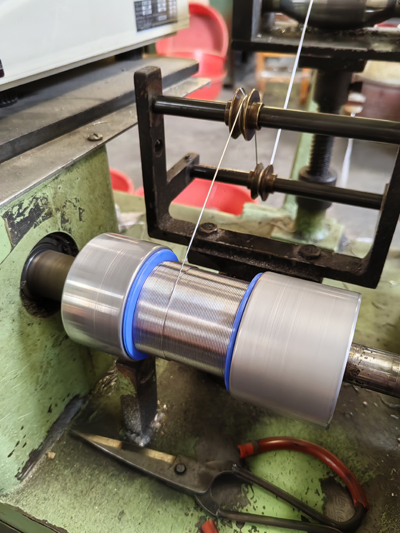
There is a reason Soldering Lead 60 40 has stayed in demand for decades despite the rise of lead-free alternatives. Several practical factors matter enormously in the Nigerian market context:
Low melting point and easy handling. Technicians working with basic soldering irons — often without precision temperature control — benefit from an alloy that melts quickly and flows readily. The 60/40 composition is forgiving of imperfect technique.
Excellent wetting and joint appearance. Tin-rich solder produces bright, smooth joints with good conductivity. Repair technicians judge quality visually, and a shiny joint builds confidence in the work.
Wide compatibility. From household appliances and audio equipment to power supplies, control boards, and lighting products, 60/40 solder performs reliably across the mix of electronics found in Nigerian repair and production shops.
Cost-effectiveness. Leaded solder remains more economical per reel than many lead-free equivalents, which matters for price-sensitive wholesale and hardware channels.
Proven track record. Generations of technicians were trained on 60/40. That familiarity is itself a commercial asset for any importer distributing Soldering Lead 60 40 for Electronics applications.
The flux core deserves separate attention because it is where much of the product's real-world performance lives. In Resin Core Soldering Lead 60 40, the resin flux is evenly distributed along the length of the wire, so every length of solder delivers consistent cleaning and wetting action.
Key benefits for end users in Nigeria:
No separate flux required — one product, one motion, faster work.
Reduced oxidation during soldering, which improves joint reliability.
Less rework — fewer cold joints and bridges mean higher throughput in repair shops and small factories.
Cleaner residue profile compared with some aggressive flux types, reducing post-solder cleaning effort.
For importers, resin-core solder is also easier to sell because it is a complete solution. A technician buying a reel does not need to add flux to the purchase — simplifying inventory decisions at the wholesale and retail level.

Packaging format is a critical commercial decision. The Soldering Lead 60 40 200g reel is the ideal entry size for the Nigerian retail chain.
Consider who buys 200g reels:
Independent repair technicians who need a manageable reel that fits in a toolbox.
Hardware shops and market stalls that want a low-ticket, fast-moving SKU with attractive shelf appeal.
Small workshops testing a supplier before committing to larger volumes.
Training centers and apprentices learning soldering fundamentals.
The 200g format keeps the unit price accessible, encourages trial purchases, and reduces the capital tied up in stock for smaller resellers. For an importer building a distribution network across multiple states, 200g reels are the volume driver that gets your brand onto counters quickly.
At the other end of the scale, the Soldering Lead 60 40 500g reel serves higher-consumption customers and offers better value per gram.
This format suits:
Electronics production lines and assembly workshops with continuous soldering work.
Larger repair centers where technicians solder throughout the day.
Wholesalers who repackage or resell to smaller outlets.
Contractors and installation teams working on appliances, generators, inverters, and control panels.
Stocking both 200g and 500g formats lets an importer cover the full demand curve — from the market stall to the factory floor — without needing multiple suppliers. XF Solder supplies both formats from the same production line, ensuring consistent alloy composition and flux performance across the range.
Diameter selection is where product knowledge becomes a genuine sales advantage. The Soldering Lead 60 40 1.0mm diameter is the precision option.
A 1.0mm wire is well suited to:
PCB repair and component-level work — resistors, capacitors, ICs, and connectors.
Mobile phone and consumer electronics repair, where fine control matters.
Small terminals and delicate joints that require controlled solder deposition.
Technicians who prefer a thinner wire for accuracy over speed.
For distributors, the 1.0mm diameter is a differentiator that appeals to the repair segment — often the highest-frequency buyer of solder in urban markets. Offering this size signals that you understand the technical needs of your customers, not just the price per kilogram.
The Soldering Lead 60 40 1.8mm diameter handles the opposite end of the spectrum: larger joints and higher thermal mass.
Typical applications include:
Power supply and inverter assembly and repair.
Terminals, lugs, and heavy-gauge wire connections.
Appliance repair — motors, heating elements, control boards with large pads.
General hardware and electrical work where a thicker wire delivers solder faster.
A thicker wire feeds more solder per unit length, which speeds up work on large joints and reduces the number of passes a technician needs. For importers serving both electronics workshops and general hardware channels, the 1.8mm diameter widens the addressable market considerably.
The phrase Soldering Lead 60 40 for Electronics captures the core positioning of this product line. It is not a generic soldering consumable — it is specified, packaged, and priced for electronics manufacturing, assembly, and repair.
When you present this range to Nigerian buyers, structure the conversation around use cases:
| Customer Type | Recommended Format |
|---|---|
| Market stall / small retailer | 200g reel, 1.0mm |
| Repair technician | 200g or 500g, 1.0mm |
| Appliance / inverter repair | 500g, 1.8mm |
| Small production line | 500g, 1.0mm and 1.8mm |
| Wholesaler / distributor | Mixed pallet of both formats |
This simple mapping helps your downstream customers buy correctly the first time — which reduces returns, builds loyalty, and increases repeat orders.

XF Solder is a Soldering Lead Chinese Manufacturer with dedicated production of tin-lead and resin-core solder wire. For Nigerian importers, sourcing directly from the manufacturer offers concrete advantages:
Consistent alloy quality. Controlled melting and drawing processes mean the Sn60Pb40 ratio is maintained batch after batch — critical when your customers expect predictable performance.
Factory-direct pricing. Removing intermediaries improves your margin structure, which matters in competitive wholesale and hardware channels.
Flexible packaging. 200g and 500g reels, multiple diameters, and private-label options allow you to build a product line suited to your market.
Export experience. Chinese solder manufacturers are accustomed to international shipping documentation, palletization, and the logistics requirements of African markets.
Volume scalability. Whether you are testing the market with a small trial order or building a container-level import program, a manufacturer can scale with you.
Working with the factory also gives you access to technical information — alloy data, flux type, recommended iron temperatures — that you can pass on to your customers, reinforcing your position as a knowledgeable supplier rather than a price-only trader.
Nigeria's electronics wholesale and hardware markets reward importers who combine reliable supply with practical product segmentation. A few observations:
Electronics wholesale clusters in major cities move large volumes of consumables; reels are a natural impulse and repeat purchase.
Hardware markets serve a broader customer base, including electricians and appliance repairers — the 1.8mm diameter performs well here.
Repair economies in every state create steady demand for 1.0mm precision solder.
Price sensitivity is real, but technicians also value consistency; a product that performs predictably earns repeat business even at a modest premium.
Stocking both reel sizes and both diameters, backed by a manufacturer who can resupply reliably, positions you to serve all these channels from a single supplier relationship.
Q1: What exactly does Sn60Pb40 mean, and why choose it over lead-free solder?
Sn60Pb40 indicates 60% tin and 40% lead. This alloy melts at a low, narrow temperature range and flows smoothly, making it easy to use with standard soldering irons. It produces bright, reliable joints and is more economical than many lead-free alternatives. For electronics repair and general manufacturing in Nigeria, it remains the familiar, trusted choice.
Q2: What is the difference between the 200g and 500g reels, and which should I import?
The Soldering Lead 60 40 200g reel suits retail counters, small workshops, and technicians — it is a low-ticket, fast-moving SKU. The Soldering Lead 60 40 500g reel serves production lines, larger repair centers, and wholesalers with better value per gram. Most importers should stock both to cover the full demand curve.
Q3: How do I choose between the 1.0mm and 1.8mm diameters?
The Soldering Lead 60 40 1.0mm diameter is for precision work — PCB repair, consumer electronics, and fine joints. The Soldering Lead 60 40 1.8mm diameter is for heavy-duty joints — power supplies, inverters, terminals, and appliance repair. Carrying both lets you serve repair technicians and hardware/electrical customers from one product line.
Q4: Is the resin core suitable for all electronics soldering, and does it require separate flux?
The resin core in Resin Core Soldering Lead Sn60Pb40 cleans and wets the joint as the solder melts, so no separate flux is needed for typical electronics work. This simplifies purchasing for technicians and reduces rework from poor wetting. For unusual or heavily oxidized surfaces, additional flux may still be used, but for standard repair and assembly the core is sufficient.
Q5: Why buy from XF Solder as your Soldering Lead Chinese Manufacturer rather than a local trader?
Buying factory-direct gives you consistent alloy quality, better pricing, flexible packaging including 200g and 500g reels in both diameters, private-label options, and the scalability to grow from trial orders to container volumes. You also gain technical documentation to support your customers — a real advantage in competitive Nigerian wholesale and hardware channels.
The Resin Core Soldering Lead Sn60Pb40 range from XF Solder is built around the realities of the Nigerian electronics market: two reel sizes to match retail and production demand, two diameters to cover precision and heavy-duty work, and a proven 60/40 alloy that technicians already trust.
As a Soldering Lead Chinese Manufacturer, XF Solder supports importers with consistent quality, factory pricing, flexible packaging, and export-ready supply. Whether you distribute through electronics wholesale markets, hardware stores, or directly to manufacturing and repair businesses, this product line gives you the formats, specifications, and supply reliability to build a profitable and repeatable import business.
Contact XF Solder today to request samples, confirm pricing for the 200g and 500g reels in 1.0mm and 1.8mm diameters, and discuss private-label options for the Nigerian market.
Contact us:
Email: xfsolder@163.com or xfsolder@gmail.com
WhatsApp/Wechat: +8613450770997


 注: 建议图片大小150px*50px