|


| Quantity: | |
|---|---|
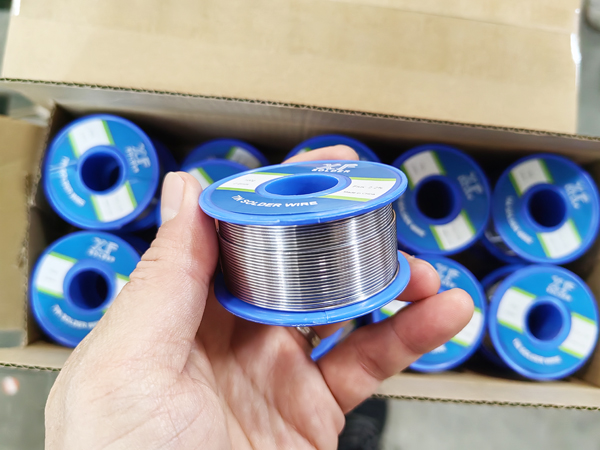
Description: XF Solder is a Chinese manufacturer of 63 37 lead solder wire. Available in 0.7mm and 2.3mm diameters with 100gm, 200gm, and 500gm spools. Ideal for circuit board welding and electronics repair. Request a quote today.
In the competitive landscape of electronics manufacturing and repair, the choice of soldering material directly influences joint reliability, production efficiency, and operational cost. Among the various alloys available, 63 37 lead solder remains a benchmark for hand soldering and rework applications where its unique thermal properties provide a distinct advantage. As a dedicated 63 37 lead solder manufacturer, XF Solder specializes in producing high-purity Sn63 Pb37 wire in configurations specifically tailored for circuit board welding. This introduction outlines our product range, focusing on the practical diameters of 63 37 lead solder 0.7mm and 63 37 lead solder 2.3mm, alongside flexible spool weights of 100gm, 200gm, and 500gm, all supplied directly from our manufacturing facility in China.
The alloy composition of 63% tin and 37% lead is known as the eutectic point for tin-lead systems. Unlike non-eutectic alloys such as 60/40, which transition through a pasty or plastic range during cooling, lead 63 37 solidifies instantly at a single temperature of 183°C . This instantaneous solidification minimizes the risk of disturbed joints and cold solder defects, a critical factor when soldering sensitive components or performing repairs on densely populated boards. For electronics producers and repair technicians who prioritize consistent wetting and predictable melting behavior, 63 37 lead solder for circuit boards offers a level of process control that is difficult to replicate with lead-free alternatives.

Understanding the operational requirements of different soldering tasks is essential for selecting the right product configuration. XF Solder provides 63 37 lead solder in two primary diameters, each engineered for distinct applications within electronics assembly and maintenance.
The 63 37 lead solder 0.7mm diameter is specifically designed for precision soldering tasks where controlled deposition is paramount. In modern electronics repair, technicians frequently encounter surface-mount devices (SMD), fine-pitch integrated circuits, and densely packed connector pins where excess solder can easily bridge adjacent pads. A 0.7mm wire allows for precise feeding, enabling the operator to apply just enough alloy to form a proper fillet without risking shorts. This diameter is also favored for rework on mobile devices, computer motherboards, and consumer electronics where space is constrained and thermal mass is low. The thin profile of the 63 37 lead solder 0.7mm melts rapidly upon contact with the iron tip, reducing dwell time and minimizing the risk of thermal damage to nearby components .
At the opposite end of the spectrum, the 63 37 lead solder 2.3mm diameter addresses applications requiring substantial solder volume and sustained heat delivery. Larger joints—such as those found in power supply sections, chassis grounds, battery terminals, and heavy-duty connectors—demand a wire that can deliver alloy quickly without the operator needing to feed excessive lengths. The thicker cross-section of 63 37 lead solder 2.3mm carries more thermal mass and maintains its structural integrity during feeding, making it suitable for soldering to heavy gauge wires or metal chassis components. For electronics manufacturers producing power electronics or industrial control boards, this diameter streamlines operations by reducing the time required to fill larger joints while ensuring complete penetration and reliable mechanical bonding.
Packaging flexibility is a practical consideration often overlooked in soldering material selection. XF Solder supplies 63 37 lead solder 100gm spools as an ideal entry-level or testing option, allowing workshops to evaluate the alloy and diameter without committing to larger inventories. The 63 37 lead solder 200gm format strikes a balance between portability and longevity, suitable for individual workstations or technicians who perform moderate-volume soldering daily. For production environments with continuous soldering operations, the 63 37 lead solder 500gm spool minimizes changeover frequency and reduces packaging waste. As a 63 37 lead solder manufacturer, we understand that consistent wire diameter, flux distribution, and spool tension are critical for uninterrupted workflow; our production processes are calibrated to ensure that each spool feeds smoothly regardless of the selected weight.
The decision to use 63 37 lead solder for circuit boards is grounded in metallurgical and operational realities that continue to justify its use in specific contexts despite the global shift toward lead-free alloys.
Eutectic Behavior Eliminates the Plastic Range. The most significant technical advantage of the 63/37 alloy is its eutectic composition. When heated, the alloy transitions directly from solid to liquid at 183°C; upon cooling, it solidifies instantly at the same temperature. This eliminates the "slushy" phase present in non-eutectic alloys, during which vibration or movement of the component can cause a grainy, unreliable joint. For repair technicians working on boards with delicate components, this rapid solidification is invaluable for achieving consistent, shiny, and mechanically sound solder joints .
Superior Wetting and Flow Characteristics. The 63/37 alloy exhibits excellent wettability, spreading evenly over copper pads and component leads to form proper intermetallic bonds. The rosin flux core—standard in our lead solder wire—activates at soldering temperatures to remove surface oxides, allowing the molten alloy to flow into tight spaces and around leads without the need for additional flux application in most cases. This self-contained flux system simplifies the soldering process and reduces residue compared to separate flux application methods .
Cost Efficiency for Repair and Specialized Manufacturing. For electronics repair businesses and manufacturers of products exempt from RoHS restrictions (such as certain aerospace, medical, and industrial equipment), lead solder remains significantly more economical than lead-free alternatives. The lower melting point of 183°C also reduces energy consumption and extends the lifespan of soldering iron tips, which operate at lower temperatures when using 63 37 lead solder compared to SAC alloys that require temperatures above 217°C . As a 63 37 lead solder manufacturer supplying directly from China, XF Solder is able to offer competitive pricing that further enhances the cost advantage for volume buyers.
The versatility of 63 37 lead solder is reflected in its widespread adoption across various segments of the electronics industry.
Circuit Board Assembly and Rework. From through-hole component installation to surface-mount rework, 63 37 lead solder for circuit boards provides reliable connections in both manual and semi-automated soldering processes. The availability of 63 37 lead solder 0.7mm supports fine-pitch SMD work, while the 63 37 lead solder 2.3mm serves heavier through-hole and connector soldering. Manufacturers producing small to medium batches of boards often prefer the predictability of 63/37 over lead-free alternatives, particularly when thermal sensitivity of components limits the maximum allowable soldering temperature.
Repair and Maintenance Operations. Television repair, computer motherboard servicing, audio equipment restoration, and general electronics troubleshooting all rely on solder that flows easily and solidifies quickly. The 63 37 lead solder 100gm and 63 37 lead solder 200gm spools are particularly popular among repair shops that need to stock multiple diameters without excessive capital tied up in inventory. The eutectic behavior of lead 63 37 ensures that repaired joints match the reliability of original factory solder joints in equipment that was manufactured before RoHS regulations took effect.
Industrial and Automotive Electronics. Certain industrial control systems, automotive modules, and power electronics continue to utilize tin-lead solder due to its proven reliability in high-vibration and thermal cycling environments. The 63 37 lead solder 500gm spools are well-suited for production lines in these sectors, where consistent material supply and predictable soldering behavior are essential for maintaining throughput and quality standards.
Selecting a supplier for soldering materials involves considerations beyond unit price. As a 63 37 lead solder manufacturer based in China, XF Solder has established production capabilities and quality control processes specifically focused on tin-lead alloy wire.
Manufacturing Consistency and Quality Control. Our production lines are configured to maintain strict tolerances on alloy composition, wire diameter, and flux core percentage. Each batch of 63 37 lead solder is monitored to ensure that the tin and lead ratios remain within the eutectic specification, as deviations can shift the melting point and alter wetting behavior. The flux core—typically rosin-based with a standard percentage—is distributed uniformly along the wire length to provide consistent fluxing action from the first centimeter of the spool to the last. For buyers requiring specific flux percentages or solid wire without flux, our OEM capabilities allow for customization to match exact production requirements .
Direct Supply and Export Experience. By purchasing directly from XF Solder, customers eliminate intermediaries and gain access to factory-level pricing and technical support. We supply 63 37 lead solder 100gm, 63 37 lead solder 200gm, and 63 37 lead solder 500gm spools to distributors, electronics manufacturers, and repair chains across multiple markets. Our export documentation and packaging are designed to ensure that the product arrives in optimal condition, with spools protected against moisture and mechanical damage during transit. Whether you require a single carton for evaluation or a full container for production, our team can accommodate orders of varying scales.
Technical Support and Responsiveness. Beyond supplying the product, we assist customers in selecting the appropriate diameter and spool size for their specific applications. Our technical team can advise on soldering iron temperature settings, tip selection, and storage conditions to maximize the performance and shelf life of 63 37 lead solder. For customers transitioning from other alloys or encountering soldering challenges, we provide practical guidance based on years of experience serving the electronics manufacturing and repair sectors.

Q1: What makes 63 37 lead solder different from 60/40 solder?
The primary difference lies in the melting behavior. 63 37 lead solder is a eutectic alloy, meaning it melts and solidifies at a single precise temperature of 183°C. In contrast, 60/40 solder transitions through a plastic range of approximately 183°C to 190°C, during which the alloy is partially solid and partially liquid. This plastic range increases the risk of disturbed joints if the component moves before complete solidification. For applications requiring consistent, repeatable joints with minimal defect risk, 63 37 lead solder is generally preferred .
Q2: Which diameter should I choose—63 37 lead solder 0.7mm or 63 37 lead solder 2.3mm?
The selection depends on the size and thermal mass of the joints you are soldering. The 63 37 lead solder 0.7mm is appropriate for fine-pitch SMD work, small pads, and delicate repairs where precise control over solder volume is necessary. The 63 37 lead solder 2.3mm is intended for larger joints such as power connectors, chassis grounds, and heavy wire terminations, where rapid delivery of alloy volume is more important than fine control. Many workshops stock both diameters to cover the full range of repair and assembly tasks they encounter.
Q3: Is the flux core sufficient, or do I need to apply additional flux?
For the majority of circuit board soldering applications, the rosin flux core within the 63 37 lead solder wire provides adequate oxide removal and wetting promotion. The flux activates as the wire melts, cleaning the surfaces being joined. Additional flux is typically only necessary when soldering heavily oxidized surfaces, reworking joints with existing contamination, or when using solid wire without a flux core. Our standard lead solder products include a rosin flux core unless otherwise specified.
Q4: What spool size is most economical for a small repair shop?
For a repair shop with moderate daily soldering activity, the 63 37 lead solder 200gm spool often represents the best balance. It provides sufficient material for weeks of typical repair work without the storage space required for larger 500gm spools. Shops that perform occasional soldering or wish to test the product may prefer the 63 37 lead solder 100gm spool, while higher-volume operations or production environments benefit from the reduced changeover frequency of the 63 37 lead solder 500gm format.
Q5: What is the recommended soldering iron temperature for 63 37 lead solder?
With a melting point of 183°C, 63 37 lead solder is typically worked at soldering iron tip temperatures between 300°C and 350°C, depending on the thermal mass of the joint and the tip geometry. Lower temperatures within this range are suitable for small joints and fine-pitch work with the 63 37 lead solder 0.7mm, while the upper end may be necessary for larger joints using the 63 37 lead solder 2.3mm. Excessive tip temperatures should be avoided to prevent flux burn-off and tip oxidation.
Q6: Is 63 37 lead solder RoHS compliant?
No, 63 37 lead solder contains lead and is therefore not compliant with the Restriction of Hazardous Substances (RoHS) directive that applies to most consumer electronics sold in the European Union and other regulated markets. However, it remains legally used in applications covered by RoHS exemptions, including certain medical devices, aerospace equipment, and industrial monitoring and control instruments. It is also widely used in repair and maintenance of equipment manufactured before RoHS regulations took effect. Customers should verify that their specific application permits the use of leaded solder .
Q7: How should I store 63 37 lead solder to maintain its quality?
63 37 lead solder should be stored in a dry, non-corrosive environment at room temperature. The spools should remain in their original packaging until use to protect the wire from moisture and atmospheric contaminants. While the alloy itself has a long shelf life, the flux core can degrade over time if exposed to humidity or excessive heat. For optimal performance, we recommend using the product within two to three years of manufacture and rotating stock on a first-in, first-out basis .
Q8: Can XF Solder provide custom flux percentages or solid wire without flux?
Yes. As a 63 37 lead solder manufacturer, we offer customization options for customers with specific process requirements. While our standard product includes a rosin flux core at a conventional percentage, we can adjust the flux content or supply solid wire without any flux core for applications where separate flux application is preferred. Custom spool weights and labeling are also available for OEM and private-label customers. Please contact our sales team with your specific requirements for a quotation.
Q9: What is the minimum order quantity for direct factory supply?
Our minimum order quantities vary depending on the product configuration and destination. For standard 63 37 lead solder products in 100gm, 200gm, and 500gm spools, we can accommodate both sample orders for evaluation and larger production orders. Customers interested in OEM customization or private labeling should discuss their volume requirements with our sales representatives to determine the most efficient production and shipping arrangement.
Q10: How does XF Solder ensure consistent quality across different production batches?
We implement incoming material inspection, in-process monitoring, and final product testing for every batch of 63 37 lead solder we produce. Alloy composition is verified to ensure the tin-lead ratio remains within eutectic specifications. Wire diameter is checked for dimensional accuracy, and flux core continuity is monitored to prevent gaps or inconsistencies. Final spools are inspected for winding tension and packaging integrity before shipment. Customers requiring certificates of analysis or conformity can request documentation with their orders.
The selection of soldering materials is a decision that affects product reliability, production efficiency, and operational cost. 63 37 lead solder from XF Solder delivers the eutectic consistency, wetting performance, and processing predictability that electronics manufacturers and repair professionals depend on. With 63 37 lead solder 0.7mm for precision work and 63 37 lead solder 2.3mm for heavy joints, along with 63 37 lead solder 100gm, 63 37 lead solder 200gm, and 63 37 lead solder 500gm spool options, we provide a configuration for virtually every circuit board soldering requirement. As a direct 63 37 lead solder manufacturer in China, we combine factory-level pricing with the quality control and responsiveness that professional buyers expect. Contact XF Solder today to discuss your requirements and request a quotation for your next order.
Contact us:
Email: xfsolder@163.com or xfsolder@gmail.com
WhatsApp/Wechat: +8613450770997


 注: 建议图片大小150px*50px