|


| Quantity: | |
|---|---|
XF Solder is a professional Tin Wire Chinese Manufacturer specializing in high-quality soldering materials for global electronics production. This product page introduces the Tin Wire Sn40 Pb60 formulation in a convenient Resin Core Tin Wire 40 60 configuration, supplied as a Tin Wire 40 60 1lb spool with a precision 0.9mm diameter. Designed for cost-sensitive electronics welding without compromising joint reliability, this Resin Core Tin Wire Sn40Pb60 offers an excellent balance of wetting performance, melting characteristics, and mechanical strength for manual and semi-automated soldering operations.
The Tin Wire Sn40 Pb60 designation refers to an alloy composed of approximately 40% tin and 60% lead by weight. Unlike the more common 60/40 formulation, this 40/60 ratio produces a solder wire with a higher melting range and a pasty stage that many operators find forgiving during hand soldering of through-hole components and connector terminals. The Resin Core Tin Wire 40 60 construction incorporates a rosin-based flux core that activates at soldering temperatures, promoting rapid wetting across copper pads, component leads, and plated through-holes.
For electronics manufacturing environments where cost control is a primary concern, the Tin Wire Sn40Pb60 for Electronics represents a pragmatic choice. The higher lead content reduces the alloy cost compared to 63/37 or 60/40 formulations, while still delivering acceptable electrical conductivity and joint integrity for non-critical assemblies, prototyping, repair work, and general-purpose circuit board soldering. The Resin Core Tin Wire Sn40Pb60 flux core eliminates the need for separate flux application in most benchtop soldering scenarios, streamlining the operator‘s workflow and reducing consumable inventory .

The flux system inside the Resin Core Tin Wire 40 60 is formulated from refined rosin, a natural resin derived from pine trees that has been used in electronics soldering for decades. When the soldering iron tip contacts the wire, the rosin core melts and flows ahead of the solder alloy, chemically cleaning mild oxidation from the metal surfaces and lowering surface tension to encourage capillary action into plated holes and component junctions.
The Resin Core Tin Wire Sn40Pb60 flux core typically represents approximately 2.0% to 2.2% of the wire’s total weight, a standard ratio that provides sufficient fluxing activity for typical electronics soldering without leaving excessive residue that could interfere with subsequent conformal coating or inspection . The residue produced by rosin flux is generally non-corrosive and non-conductive, making the Tin Wire Sn40Pb60 0.9mm suitable for applications where post-solder cleaning is impractical or undesirable.
Operators using the Tin Wire 40 60 0.9mm will observe a melting range that begins around 183°C and completes near 190°C, depending on the specific heating profile and thermal mass of the joint. This range is well within the capabilities of standard temperature-controlled soldering stations set between 300°C and 350°C. The 0.9mm diameter strikes an effective balance: thin enough for precise work on densely populated boards, yet robust enough to deliver adequate solder volume for larger through-hole joints without frequent reloading.
The Tin Wire 40 60 1lb spool configuration is a standard industry packaging format that suits both small-scale repair shops and larger production lines. One pound (approximately 454 grams) of 0.9mm solder wire provides a practical working quantity that minimizes downtime from spool changes while remaining manageable for storage and inventory control. The spool itself is designed for smooth, tangle-free feeding through manual soldering iron guides or desoldering stations.
As a Tin Wire Chinese Manufacturer, XF Solder operates from Foshan, Guangdong Province, with convenient access to major export ports including Guangzhou and Shenzhen . This geographic advantage translates into competitive freight costs and shorter lead times for international buyers sourcing the Tin Wire Sn40Pb60 1lb for distribution or direct production use. The 1lb spool format is particularly well-suited for export packaging, as it balances shipping efficiency with the handling preferences of electronics assembly operations across Southeast Asia, the Middle East, Africa, and the Americas.

The Tin Wire Sn40Pb60 0.9mm diameter is a deliberate specification for electronics welding tasks that demand controlled solder deposition. At 0.9mm, the wire feeds smoothly through standard soldering iron tips and allows the operator to regulate the amount of solder applied to each joint with a high degree of precision. This is particularly valuable when soldering surface-mount passive components, fine-pitch connectors, and densely packed through-hole arrays where excess solder can bridge adjacent pads.
The Tin Wire 40 60 0.9mm is also compatible with many automated and semi-automated soldering systems that accept wire feedstock in the 0.8mm to 1.0mm range. The wire’s diameter tolerance is maintained within industry-acceptable limits, ensuring consistent feed rates and predictable deposition volumes across production runs. For applications requiring slightly larger or smaller diameters, the same Resin Core Tin Wire Sn40Pb60 alloy and flux formulation is available in a range of diameters from 0.5mm to 3.2mm, allowing engineers to standardize on a single alloy chemistry across multiple process stations .
The Tin Wire Sn40Pb60 for Electronics is recommended for a specific segment of soldering work where the higher melting point and pasty range of the 40/60 alloy do not present a disadvantage. Typical applications include:
Through-hole printed circuit board assembly: component leads and plated holes in consumer electronics, power supplies, and control boards.
Connector and terminal soldering: D-sub connectors, header pins, wire-to-board terminals, and chassis-mounted receptacles.
Prototyping and repair: rework of legacy equipment and hand-built circuits where leaded solder is permitted.
General electrical joints: speaker terminals, switch lugs, and small transformer connections.
For best results with the Tin Wire Sn40Pb60 for Electronics, operators should ensure that component leads and pads are clean and free of heavy oxidation before soldering. A soldering iron tip temperature of 320°C to 360°C is generally appropriate for 0.9mm wire on standard FR-4 boards, with contact times of two to four seconds per joint. The rosin flux core will activate within this window, promoting smooth fillet formation and minimizing the risk of cold joints.
It is important to note that lead-bearing solders are subject to regulatory restrictions in certain markets and applications, particularly those covered by the RoHS directive in the European Union. The Resin Core Tin Wire Sn40Pb60 is not intended for RoHS-compliant products, drinking water systems, or applications where lead content is specifically prohibited. XF Solder also manufactures lead-free alternatives for customers requiring RoHS compliance .
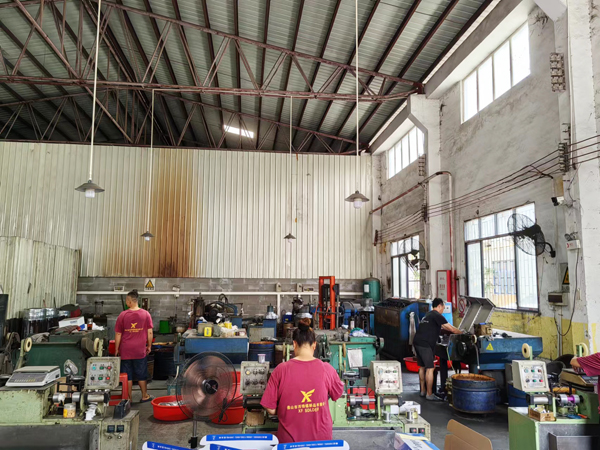
XF Solder has established itself as a reliable Tin Wire Chinese Manufacturer by maintaining rigorous quality control throughout the production process. The manufacturing sequence begins with the melting and alloying of tin and lead ingots, followed by casting into round bars, extrusion into hollow wire forms, and precision drawing to the final 0.9mm diameter while simultaneously injecting the rosin flux core . Each production batch undergoes composition verification to confirm that the tin and lead ratios meet specification, and finished spools are inspected for wire diameter consistency, flux continuity, and spool winding integrity.
Customers sourcing the Resin Core Tin Wire Sn40Pb60 from XF Solder benefit from direct factory pricing, flexible order quantities ranging from single spools to full container loads, and responsive communication throughout the order lifecycle. The company‘s location in Foshan places it within the Pearl River Delta manufacturing ecosystem, providing access to reliable raw material suppliers and efficient logistics networks for global shipment.
The Tin Wire Sn40 Pb60 contains approximately 40% tin and 60% lead, whereas 60/40 solder contains 60% tin and 40% lead. The higher lead content in the 40/60 alloy raises the melting range and creates a wider pasty stage between solid and liquid states. This makes the Resin Core Tin Wire 40 60 somewhat more forgiving for hand soldering of larger joints, though it is not ideal for applications requiring the lowest possible melting point or the highest tensile strength. The 40/60 formulation is generally more economical due to its lower tin content.
No. The Resin Core Tin Wire Sn40Pb60 contains lead and is not compliant with RoHS or other lead-restriction regulations. It should be used only in applications where leaded solder is explicitly permitted, such as legacy equipment repair, certain industrial electronics, and markets without lead-restriction requirements. For lead-free production, XF Solder offers SAC305 and other lead-free alloy wires.
For typical electronics soldering with the Tin Wire Sn40Pb60 0.9mm, set your soldering station between 350°C and 400°C. The alloy‘s melting range begins around 200°C, but the iron tip must be significantly hotter to transfer heat rapidly into the joint without prolonged contact that could damage components or the PCB. Adjust upward for large thermal masses and downward for delicate pads.
The Tin Wire 40 60 1lb spool contains approximately 454 grams of solder wire. At 0.9mm diameter, this represents a substantial length of wire suitable for hundreds to thousands of solder joints, depending on joint size and deposition volume. The exact length varies with alloy density, but the 1lb format is standardized for consistent inventory planning across production environments.
Yes. As a flexible Tin Wire Chinese Manufacturer, XF Solder accepts customization requests for flux content ranging from approximately 1.1% to 3.3%, as well as wire diameters from 0.2mm to 3.2mm. Custom spool weights and labeling options are also available for distributors and OEM customers. Contact the XF Solder team with your specific requirements for a quotation.
Rosin flux residue from the Resin Core Tin Wire Sn40Pb60 is generally non-corrosive and non-conductive, so cleaning is optional for most electronics applications. However, if the assembly will be conformally coated or if cosmetic appearance is important, the residue can be removed with isopropyl alcohol or a commercial flux remover. In no-clean process environments, the residue may be left in place without affecting electrical performance.
If you are looking for a Chinese Manufacturer and supplier of Resin Core Tin Wire, please contact us:
Email: xfsolder@gmail.com or xfsolder@163.com
WhatsApp/Wechat: +8613450770997


 注: 建议图片大小150px*50px